| (3 min. or less, along with 3 multiple choice questions) |
| eTextbook Reading: |
A nominal interest rate is the rate of interest paid for a loan, unadjusted for inflation.
Nominal interest rate is the rate you see (savings rate, car loan rate, home mortgage rate).
Real interest rate is the rate you really get which is the nominal interest rate minus the
actual inflation rate.
Lenders and borrowers establish nominal interest rates as the sum of their
expected real interest rate and expected inflation rate.
Nominal Interest Rate = Expected Real Interest Rate + Expected Inflation
A real interest rate can be calculated in hindsight by subtracting the actual inflation
rate from the nominal interest rate.
Real Interest Rate = Nominal Interest Rate - Actual Inflation rate
Nominal interest rate is the rate you see (savings rate, car loan rate, home mortgage rate).
Real interest rate is the rate you really get which is the nominal interest rate minus the
actual inflation rate.
Lenders and borrowers establish nominal interest rates as the sum of their
expected real interest rate and expected inflation rate.
Nominal Interest Rate = Expected Real Interest Rate + Expected Inflation
A real interest rate can be calculated in hindsight by subtracting the actual inflation
rate from the nominal interest rate.
Real Interest Rate = Nominal Interest Rate - Actual Inflation rate
| eWorkbook Activities Interactive: |
| eVideos -- Short Videos: |
| eVideos -- Short Videos: |
| Day 2: Week 7 |
| eWorkbook Activities Interactive: |
| eTextbook Reading: |
NOTE: Prior to April 24, 2020, savings accounts were a component of M2.
After April 24, 2020, savings accounts are listed as a component of M1.
After April 24, 2020, savings accounts are listed as a component of M1.
- - - - - - - - - - - - - - - - - - - - - - - - - - - - - - - - - - - - - - - - - - - - - - - - - - - - - - - -
- - - - - - - - - - - - - - - - - - - - - - - - - - - - - - - - - - - - - - - - - - - - - - - - - - - - - - - -
Topic 4.4 The History of Banking & the Expansion of the Money Supply
| eVideos -- Short Videos: |
The most liquid forms of money are cash and demand deposits.
Demand deposits are an economics term meaning checking accounts.
When you go to the bank, you can get money out of your checking
account on demand, thus, the term demand deposits.
NOTE: Notice in each of the three statements below the term
"bonds" shows up. Know these three statements for the exam.
Other financial assets people can hold in place of the most liquid forms
of money include bonds (interest-bearing assets) and stocks (equity).
The price of previously issued bonds and interest rates on bonds
are inversely related.
The opportunity cost of holding money is the interest that could have
been earned from holding other financial assets such as bonds.
Demand deposits are an economics term meaning checking accounts.
When you go to the bank, you can get money out of your checking
account on demand, thus, the term demand deposits.
NOTE: Notice in each of the three statements below the term
"bonds" shows up. Know these three statements for the exam.
Other financial assets people can hold in place of the most liquid forms
of money include bonds (interest-bearing assets) and stocks (equity).
The price of previously issued bonds and interest rates on bonds
are inversely related.
The opportunity cost of holding money is the interest that could have
been earned from holding other financial assets such as bonds.
| eWorkbook Activities Interactive: |
Topic 4.3 Definition, Measurement, & Functions of Money
| eTextbook Reading: A Historical Perspective of the Money Market |
Topic 4.2 Nominal v. Real Interest Rate
- - - - - - - - - - - - - - - - - - - - - - - - - - - - - - - - - - - - - - - - - - - - - - - - - - - - - - - -
- - - - - - - - - - - - - - - - - - - - - - - - - - - - - - - - - - - - - - - - - - - - - - - - - - - - - - - -
| Day 4: Week 7 |
Prior to 2008, the Federal Reserve System operated in a limited
reserves environment where individual commercial banks held both
required and excess reserves in their vaults or on reserve with the
Federal Reserve.
The lessons inside Topics 4.4 are historical lessons on how
the Federal Reserve used to operate. When you get to Topic 4.6
The Current Monetary, you will learn how the Federal Reserve
currently operates.
reserves environment where individual commercial banks held both
required and excess reserves in their vaults or on reserve with the
Federal Reserve.
The lessons inside Topics 4.4 are historical lessons on how
the Federal Reserve used to operate. When you get to Topic 4.6
The Current Monetary, you will learn how the Federal Reserve
currently operates.
| (3 min. or less, along with 3 multiple choice questions) |
| Day 5: Week 7 |
| eTextbook Reading: |
- - - - - - - - - - - - - - - - - - - - - - - - - - - - - - - - - - - - - - - - - - - - - - - - - - - - - - - -
| eWorkbook Activities Interactive: |
Topic 4.4 The History of Banking & the Expansion of the Money Supply
| eVideos -- Short Videos: |
| eVideos -- Short Videos: |
Topic 4.1 Financial Assets
| eWorkbook Activities Interactive: |
| Day 1: Week 7 |
| eTextbook Reading: A Historical Perspective of the Money Market |
| Day 3: Week 7 |
- - - - - - - - - - - - - - - - - - - - - - - - - - - - - - - - - - - - - - - - - - - - - - - - - - - - - - - - - - - - - -
Prior to 2008, the Federal Reserve System operated in a limited
reserves environment where individual commercial banks held both
required and excess reserves in their vaults or on reserve with the
Federal Reserve.
The lessons inside Topics 4.4 are historical lessons on how
the Federal Reserve used to operate. When you get to Topic 4.6
The Current Monetary, you will learn how the Federal Reserve
currently operates.
reserves environment where individual commercial banks held both
required and excess reserves in their vaults or on reserve with the
Federal Reserve.
The lessons inside Topics 4.4 are historical lessons on how
the Federal Reserve used to operate. When you get to Topic 4.6
The Current Monetary, you will learn how the Federal Reserve
currently operates.
| (17% – 27% of the exam) |
Unit 4: Financial Sector
• Topic 4.1 Financial Assets
• Topic 4.2 Nominal v. Real Interest Rates
• Topic 4.3 Definition, Measurement, & Functions of Money
• Topic 4.4 The History of Banking and the Expansion of the Money Supply
• Topic 4.5 The History of the Money Market and Money Market Graph
• Topic 4.6 The Current Monetary Policy (2008 - Present)
• Topic 4.7 The Loanable Funds Market
• Topic 4.1 Financial Assets
• Topic 4.2 Nominal v. Real Interest Rates
• Topic 4.3 Definition, Measurement, & Functions of Money
• Topic 4.4 The History of Banking and the Expansion of the Money Supply
• Topic 4.5 The History of the Money Market and Money Market Graph
• Topic 4.6 The Current Monetary Policy (2008 - Present)
• Topic 4.7 The Loanable Funds Market
- - - - - - - - - - - - - - - - - - - - - - - - - - - - - - - - - - - - - - - - - - - - - - - - - - - - - - - -
This is not on the exam, but it is good to know for your financial future.
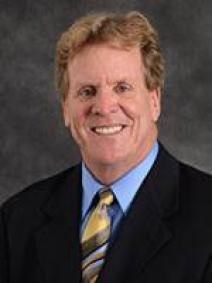
| Steven M. Reff Economics Lecturer University of Arizona (2007 - 2016) The 2015 University of Arizona Five-Star Faculty Award Steven Reff's Resume |
| Unit 4 Financial Sector |
| Week 7 |
| Principles of Macroeconomics |
- - - - - - - - - - - - - - - - - - - - - - - - - - - - - - - - - - - - - - - - - - - - - - - - - - - - - - - -