
| Steven M. Reff Economics Lecturer University of Arizona (2007 - 2016) The 2015 University of Arizona Five-Star Faculty Award |
| Week 14: Monetary Policy -- Ample Reserves Framework and Regime |
| Estimated Learning Time: 5 to 6 class periods (45 min. each) |
NOTE: Reffonomics Baseball can be played inside a classroom or all the questions in
the game can be answered individually as homework.
the game can be answered individually as homework.
| Standard 14: Economics Baseball -- Ample Reserves and ASAD |
- - - - - - - - - - - - - - - - - - - - - - - - - - - - - - - - - - - - - - - -
- - - - - - - - - - - - - - - - - - - - - - - - - - - - - - - - - - - - - - - -
March 2026 News Articles on the Federal Reserve:
| The Federal Open Market Committee (FOMC) conducts monetary policy by setting the target range upper limit and lower limit for the federal funds rate (FFR). The federal funds rate (FFR) is the interest rate banks and other institutions charge each other for overnight loans. |
When the FOMC decision is based upon the data discussed
at the FOMC meeting. If the Fed decides to RAISE the Federal
Funds Target Range -- Upper and Lower Limits, this indicates
Fed's concern is the current inflation and/or expected inflation
rate is moving too high relative to its 2% target inflation rate.
By RAISING the FFR target range, the Fed tries to make
borrowing more expensive. As short-term borrowing costs rise,
indirectly, this influences long-term borrowing costs. Individuals',
households', and business' borrowing decreases which decreases
aggregate demand, slowing the economy down.
The FOMC makes a decision to LOWER the Federal Funds
Target Range -- Upper and Lower Limits if the Fed's data
indicates current falling employment and/or expected employment
and/or output data is declining. By LOWERING interest rates,
the Fed makes borrowing less expensive. Individuals', households',
and business' borrowing has a propensity (tendency) to increase
which increases aggregate demand, speeding up the economy.
The FOMC makes a decision to take a "wait-and-see" approach if the
Fed's outlook about stable prices and maximum employment (Dual
Mandate) is in good enough shape, it waits until the next meeting to
make a decision to raise, lower, or maintain the FFR target range.
at the FOMC meeting. If the Fed decides to RAISE the Federal
Funds Target Range -- Upper and Lower Limits, this indicates
Fed's concern is the current inflation and/or expected inflation
rate is moving too high relative to its 2% target inflation rate.
By RAISING the FFR target range, the Fed tries to make
borrowing more expensive. As short-term borrowing costs rise,
indirectly, this influences long-term borrowing costs. Individuals',
households', and business' borrowing decreases which decreases
aggregate demand, slowing the economy down.
The FOMC makes a decision to LOWER the Federal Funds
Target Range -- Upper and Lower Limits if the Fed's data
indicates current falling employment and/or expected employment
and/or output data is declining. By LOWERING interest rates,
the Fed makes borrowing less expensive. Individuals', households',
and business' borrowing has a propensity (tendency) to increase
which increases aggregate demand, speeding up the economy.
The FOMC makes a decision to take a "wait-and-see" approach if the
Fed's outlook about stable prices and maximum employment (Dual
Mandate) is in good enough shape, it waits until the next meeting to
make a decision to raise, lower, or maintain the FFR target range.
At the FOMC meeting, the Federal Funds Target Range -- Upper Limit and Lower Limit is decided.
| FOMC Statement (Wednesday, October 29, 2025) |
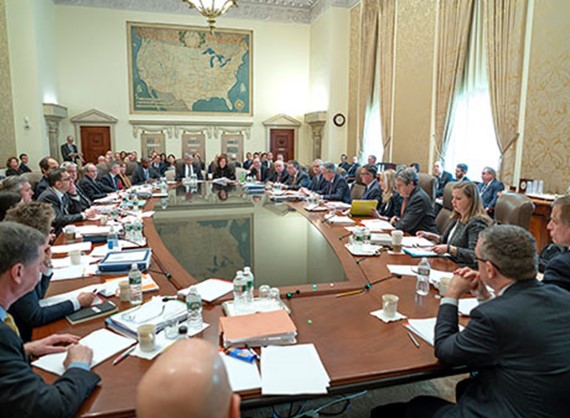
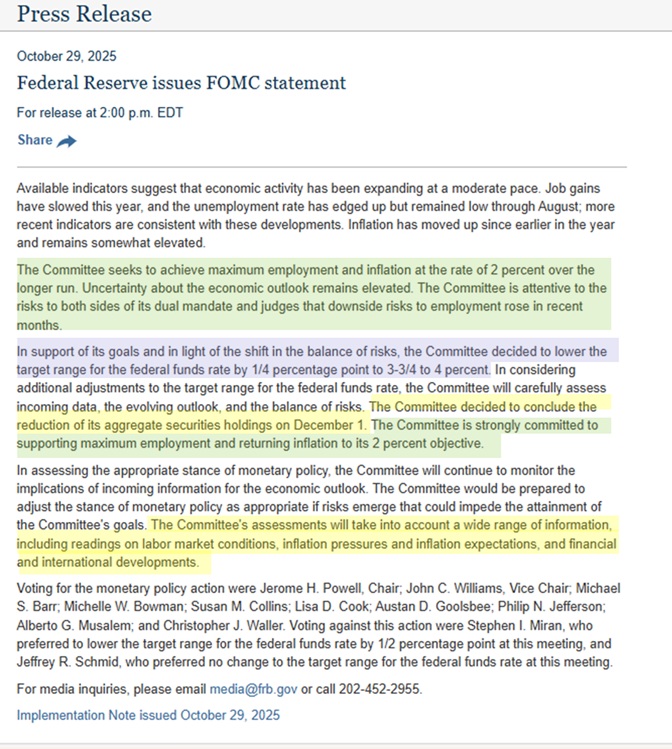
| The FOMC has to follow the Dual Mandate Congress (maximum employment and inflation rate of 2% over the long run). |
| The FOMC looks at this data and other relevant information in making their decisions on monetary policy. |
| Federal Funds Target Range is lowered 0.25% or 25 basis points or 1/4 percentage point. |
| The FOMC is holding enough reserves to remain ample. |
- - - - - - - - - - - - - - - - - - - - - - - - - - - - - - - - - - - - - - - - - - - -
- - - - - - - - - - - - - - - - - - - - - - - - - - - - - - - - - - - - - - - - - - - -
| The Federal Open Market Committee (FOMC) tends to INCREASE its target range for the federal funds rate when inflation is too high. The Federal Open Market Committee (FOMC) tends to DECREASE its target range for the federal funds rate when unemployment is too high. |
- - - - - - - - - - - - - - - - - - - - - - - - - - - - - - - - - - - - - - - - - - - -
| When you touch blue (upper limit) and red (lower limit) lines on the FRED graph above, notice the spread between the two has been 0.25% or 25 basis points since December 2008. |
To make understanding Monetary Policy really easy to understand now that you have learned the
difficult part on the lesson above, let's eliminate the Federal Funds Target Range and stay focused
on the middle of the road -- Interest on Reserve Balances (IORB) and the Effective Federal Funds
Rate (FFR).
difficult part on the lesson above, let's eliminate the Federal Funds Target Range and stay focused
on the middle of the road -- Interest on Reserve Balances (IORB) and the Effective Federal Funds
Rate (FFR).
The interactive graph above relates to the FRED graph on the right.
1) Take your cursor and drag the Interest on Reserve Balances (IORB) down near zero so it matches the beginning
of the FRED graph in 2021.
2) Start raising the IORB and the FFR rises in unison. Explain that this is called, CONTRACTIONARY MONETARY POLICY,
as short-term interest rates start to rise as the FED believes expected inflation is rising.
3) Start lowering the IORB and the FFR falls in unison. Explain that this is called, EXPANSIONARY MONETARY POLICY,
as short-term interest rates start to fall as the FED believes maximum employment is more important than current or
expected inflation.
1) Take your cursor and drag the Interest on Reserve Balances (IORB) down near zero so it matches the beginning
of the FRED graph in 2021.
2) Start raising the IORB and the FFR rises in unison. Explain that this is called, CONTRACTIONARY MONETARY POLICY,
as short-term interest rates start to rise as the FED believes expected inflation is rising.
3) Start lowering the IORB and the FFR falls in unison. Explain that this is called, EXPANSIONARY MONETARY POLICY,
as short-term interest rates start to fall as the FED believes maximum employment is more important than current or
expected inflation.
Show and explain on the Ample Reserves Interactive Graph below and by touching different spots on the
FRED graph to the right, what type of monetary policy is the Federal Reserve trying to accomplish --
Expansionary, Contractionary, or Wait-and-See Monetary Policy?
FRED graph to the right, what type of monetary policy is the Federal Reserve trying to accomplish --
Expansionary, Contractionary, or Wait-and-See Monetary Policy?
Shrink You Screen to 90% to view entire interative graphs and flow chart

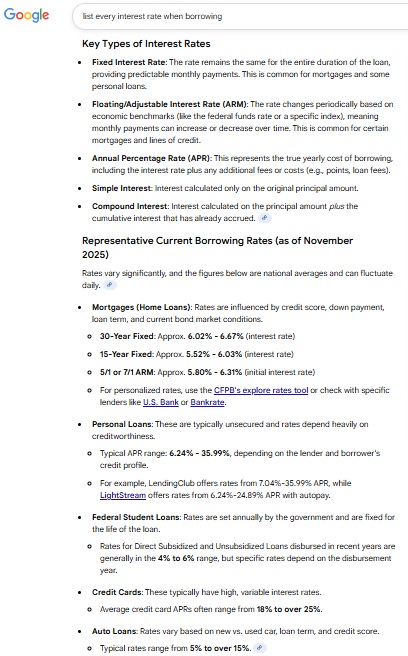
Saving Money
Borrowing Money
Photo above from Google AI
What can you conclude from looking below at the interest rates information for savings compared to borrowing?
Interactive Activities: Lessons on Discussing Past FOMC Meeting Statements
- - - - - - - - - - - - - - - - - - - - - - - - - - - - - - - - - - - - - - - - - - - -
- - - - - - - - - - - - - - - - - - - - - - - - - - - - - - - - - - - - - - - - - - - -
The ASAD graph on the right indicates the economy is in a Recessionary Gap or Negative Output Gap.
The Fed might use Expansionary Monetary Policy to alleviate this gap.
Using the Flow Chart below the two graphs, click on either the Up arrow or Down arrow relating to the topic above
the arrow and follow the directions for the two graphs above the Flow Chart.
The Fed might use Expansionary Monetary Policy to alleviate this gap.
Using the Flow Chart below the two graphs, click on either the Up arrow or Down arrow relating to the topic above
the arrow and follow the directions for the two graphs above the Flow Chart.
The ASAD graph on the right indicates the economy is in an Inflationary Gap or Positive Output Gap.
The Fed might use Contractionary Monetary Policy to alleviate this gap.
Using the Flow Chart below the two graphs, click on either the Up arrow or Down arrow relating to the topic above
the arrows and follow the directions for the two graphs above the Flow Chart.
The Fed might use Contractionary Monetary Policy to alleviate this gap.
Using the Flow Chart below the two graphs, click on either the Up arrow or Down arrow relating to the topic above
the arrows and follow the directions for the two graphs above the Flow Chart.
- - - - - - - - - - - - - - - - - - - - - - - - - - - - - - - - - - - - - - - - - - - -
Expansionary Monetary Policy
Contractionary Monetary Policy
Photo above from Google AI
Contractionary Monetary Policy
| History of Transitioning from a Limited Reserves Framework (Pre-Dec. 2008) to an Ample Reserves Framework from (Post-Dec. 2008 to 2019) |
- - - - - - - - - - - - - - - - - - - - - - - - - - - - - - - - - - - - - - - - - - - -
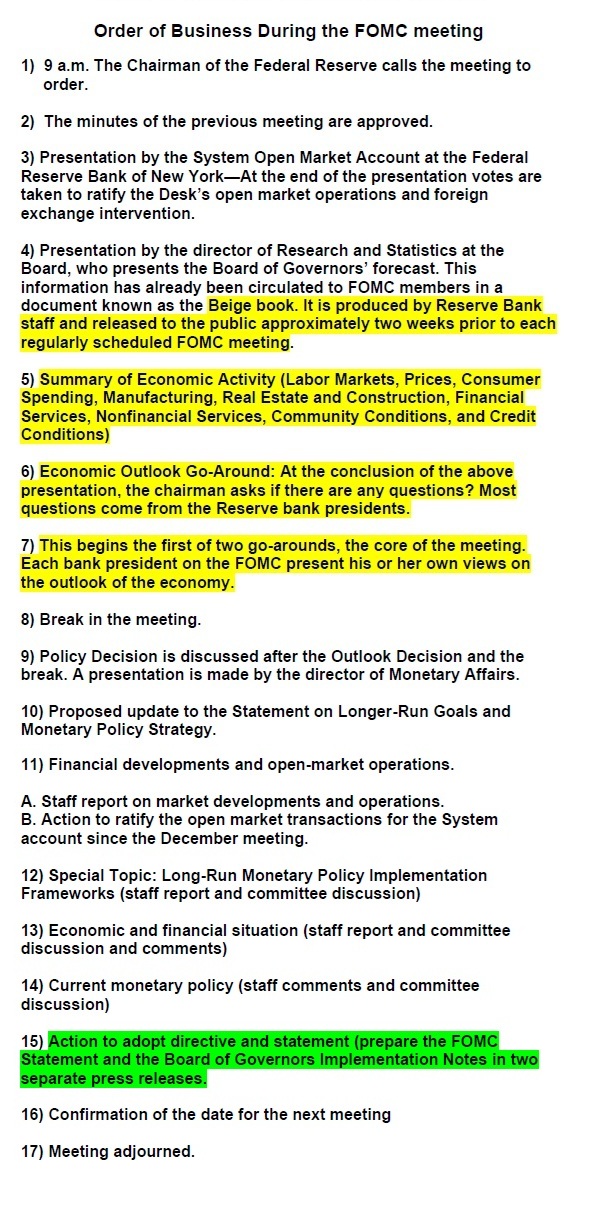
| What Happens inside an FOMC Meeting? Here's the Agenda! |
- - - - - - - - - - - - - - - - - - - - - - - - - - - - - - - - - - - - - - - - - - - -
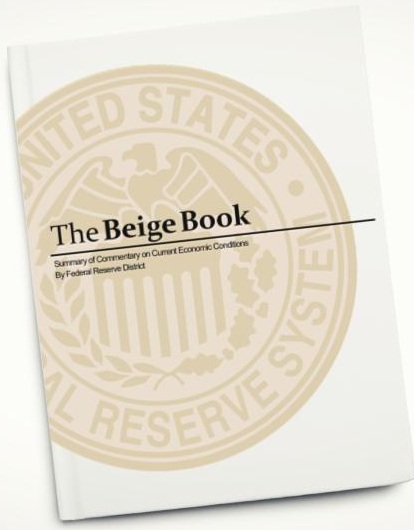
| Notice inside the agenda to the left, Steps 4) through 7) are all about what is inside the Beige Book. |
| In fact, number 11) is where you are heading in the lesson below--The TWO press releases in FOMC Statement and the Board of Governors Implementation Notes. |
| Directions for Reading the Beige Book: |
When you scroll down, look at the page number located in
the upper right hand corner of the odd pages and upper left
hand corner of the Beige Book and NOT the page number
located inside the tool bar at the top.
The screen inside the Beige Book to the left can be enlarged.
Scroll down to :
Pages 1 - 2: Read the 1 ½ page the National Summary of:
Overall Economic Activity, Labor Markets, and Prices.
Pages 2 – 4: Find your District Federal Reserve Bank’s
Overall Economic Activity one paragraph summary.
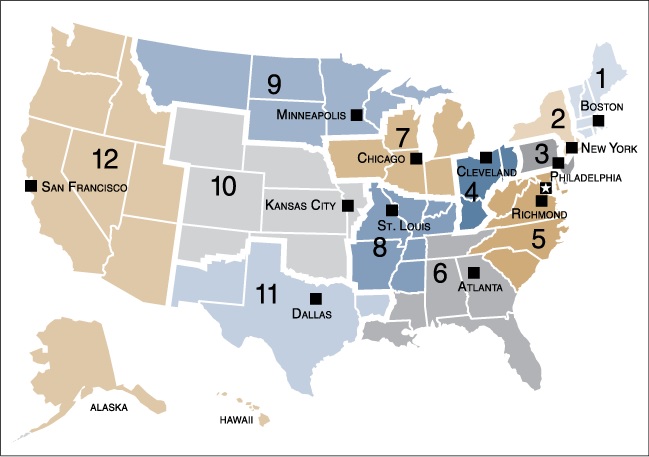
NOTE: The 12 Federal Reserve districts were assigned
numbers from east to west, with Boston as the first district
and San Francisco as the 12th. The Reserve Bank
Organization Committee (RBOC) selected the cities and
districts in 1913, and the banks opened in 1914.
Pages 5 – 48: Find and read your District Federal Reserve
Bank’s 3 to 3 ½ page detailed summary on the pages below:
Page 5: Federal Reserve Bank of Boston (District 1)
Page 8: Federal Reserve Bank of New York (District 2)
Page 12: Federal Reserve Bank of Philadelphia (District 3)
Page 16: Federal Reserve Bank of Cleveland (District 4)
Page 20: Federal Reserve Bank of Richmond (District 5)
Page 24: Federal Reserve Bank of Atlanta (District 6)
Page 28: Federal Reserve Bank of Chicago (District 7)
Page 32: Federal Reserve Bank of St. Louis (District 8)
Page 34: Federal Reserve Bank of Minneapolis (District 9)
Page 37: Federal Reserve Bank of Kansas City (District 10)
Page 41: Federal Reserve Bank of Dallas (District 11)
Page 45: Federal Reserve Bank of San Francisco (District 12)
the upper right hand corner of the odd pages and upper left
hand corner of the Beige Book and NOT the page number
located inside the tool bar at the top.
The screen inside the Beige Book to the left can be enlarged.
Scroll down to :
Pages 1 - 2: Read the 1 ½ page the National Summary of:
Overall Economic Activity, Labor Markets, and Prices.
Pages 2 – 4: Find your District Federal Reserve Bank’s
Overall Economic Activity one paragraph summary.
NOTE: The 12 Federal Reserve districts were assigned
numbers from east to west, with Boston as the first district
and San Francisco as the 12th. The Reserve Bank
Organization Committee (RBOC) selected the cities and
districts in 1913, and the banks opened in 1914.
Pages 5 – 48: Find and read your District Federal Reserve
Bank’s 3 to 3 ½ page detailed summary on the pages below:
Page 5: Federal Reserve Bank of Boston (District 1)
Page 8: Federal Reserve Bank of New York (District 2)
Page 12: Federal Reserve Bank of Philadelphia (District 3)
Page 16: Federal Reserve Bank of Cleveland (District 4)
Page 20: Federal Reserve Bank of Richmond (District 5)
Page 24: Federal Reserve Bank of Atlanta (District 6)
Page 28: Federal Reserve Bank of Chicago (District 7)
Page 32: Federal Reserve Bank of St. Louis (District 8)
Page 34: Federal Reserve Bank of Minneapolis (District 9)
Page 37: Federal Reserve Bank of Kansas City (District 10)
Page 41: Federal Reserve Bank of Dallas (District 11)
Page 45: Federal Reserve Bank of San Francisco (District 12)
The Beige Book was first published in 1970 as the Red Book. In 1983, the book's color was
changed from red to beige to make it less conspicuous.
The Beige Book is typically published two weeks before each FOMC meeting, allowing policy
makers to review regional economic conditions before making monetary policy decisions.
Market participants (public and private financial advisors) closely analyze the Beige Book to
gauge the potential direction of the FOMC's monetary policy decisions, which can influence
financial market movements.
The Beige Book is considered quite important within FOMC meetings as it provides valuable
anecdotal information about current economic conditions across different regions, offering
insights into emerging trends that may not be captured by traditional economic data. This
helps the FOMC make informed decisions about monetary policy, particularly when deciding
whether to raise, lower, or maintain administered and policy rates.
Qualitative data:
Unlike most economic data which is quantitative, the Beige Book provides qualitative insights
gathered from direct conversations with businesses and community contacts in each Federal
Reserve district. Each Federal Reserve Bank gathers information from Bank and Branch
directors, interviews with business contacts, economists, and market experts.
The information is summarized by District. Last, a designated Federal Reserve Bank prepares
an overall summary of the twelve district reports.
Real-time perspective:
As it's released roughly two weeks before each FOMC meeting, the Beige Book offers a
near-current snapshot of economic activity, allowing the committee to assess recent trends.
Regional insights:
By compiling information from all 12 Federal Reserve districts, the Beige Book highlights potential
regional differences in economic conditions, which can be crucial for understanding the overall
economic picture.
Complementary to hard data:
While not a definitive indicator, the Beige Book acts as a supplement to traditional economic
statistics, helping to identify emerging issues or nuances that may not be apparent in standard
data sets.
*Information above comes from Microsoft Edge Google AI
changed from red to beige to make it less conspicuous.
The Beige Book is typically published two weeks before each FOMC meeting, allowing policy
makers to review regional economic conditions before making monetary policy decisions.
Market participants (public and private financial advisors) closely analyze the Beige Book to
gauge the potential direction of the FOMC's monetary policy decisions, which can influence
financial market movements.
The Beige Book is considered quite important within FOMC meetings as it provides valuable
anecdotal information about current economic conditions across different regions, offering
insights into emerging trends that may not be captured by traditional economic data. This
helps the FOMC make informed decisions about monetary policy, particularly when deciding
whether to raise, lower, or maintain administered and policy rates.
Qualitative data:
Unlike most economic data which is quantitative, the Beige Book provides qualitative insights
gathered from direct conversations with businesses and community contacts in each Federal
Reserve district. Each Federal Reserve Bank gathers information from Bank and Branch
directors, interviews with business contacts, economists, and market experts.
The information is summarized by District. Last, a designated Federal Reserve Bank prepares
an overall summary of the twelve district reports.
Real-time perspective:
As it's released roughly two weeks before each FOMC meeting, the Beige Book offers a
near-current snapshot of economic activity, allowing the committee to assess recent trends.
Regional insights:
By compiling information from all 12 Federal Reserve districts, the Beige Book highlights potential
regional differences in economic conditions, which can be crucial for understanding the overall
economic picture.
Complementary to hard data:
While not a definitive indicator, the Beige Book acts as a supplement to traditional economic
statistics, helping to identify emerging issues or nuances that may not be apparent in standard
data sets.
*Information above comes from Microsoft Edge Google AI
- - - - - - - - - - - - - - - - - - - - - - - - - - - - - - - - - - - - - - - - - - - -
| Current and Past History of the Beige Book |
| What is Inside the Beige Book? |
| What does the FOMC Discuss inside its Meeting? |
| The Current History: |
- - - - - - - - - - - - - - - - - - - - - - - - - - - - - - - - - - - - - - - - - - - -
| 2025 |
| The Beige Book is an anecdotal report on current economic conditions across the 12 Federal Reserve Districts. Officially titled the Summary of Commentary on Current Economic Conditions by Federal Reserve District, it is published eight times a year by the Federal Reserve Board roughly two weeks before each meeting of the Federal Open Market Committee (FOMC) -- to help officials set monetary policy. Google ASK AI 5 |
| "In an on-level high school economics course, students should understand that Federal Open Market Committee (FOMC) meetings are where the nation's most critical monetary policy decisions are made. These meetings determine how the Federal Reserve will use its tools to influence the economy toward its "dual mandate" of maximum employment and price stability (low inflation)." Google Ask AI 6 |
| 2025 |
At the end of each of the eight annual meetings, the FOMC issues two press releases:
1) FOMC Statement
2) Board Implementation Notes
1) FOMC Statement
2) Board Implementation Notes
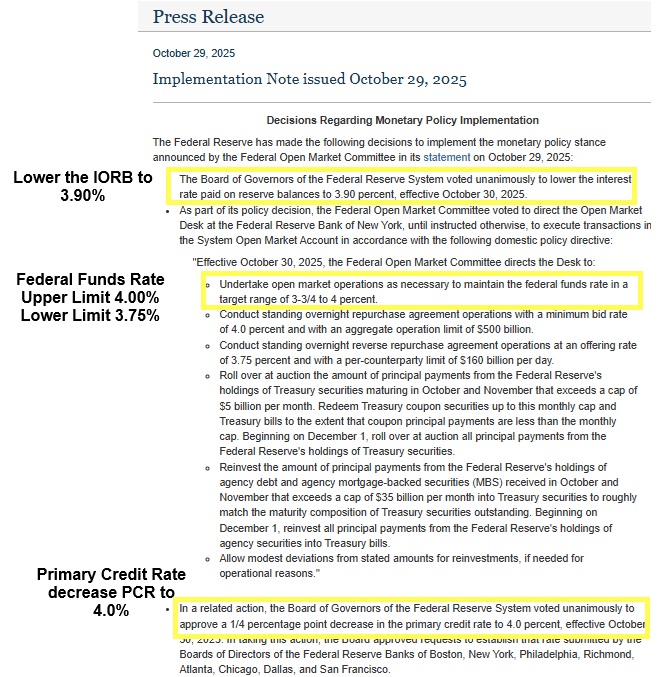
| Implementation Notes of the Board of Governors (Tuesday, October 29, 2025) |
Pretend as if you are a member of
the FOMC and you have to decide
whether to increase, decrease, or
stay the course on the Federal
Funds Rate.
the FOMC and you have to decide
whether to increase, decrease, or
stay the course on the Federal
Funds Rate.
| "Borrowing rates are higher than savings rates primarily because banks operate as businesses that must generate a profit from the "spread"—the difference between what they pay you to hold your money and what they charge others to borrow it. If borrowing rates were lower than savings rates, you could theoretically take out a loan and deposit it into a savings account to earn a risk-free profit, which would cause the bank to lose money. Why the Gap Exists? The Profit "Spread": Banks borrow money from depositors at a low rate and lend it to others at a higher rate. This margin covers their operating costs (staff, branches, technology) and provides a profit for their shareholders. Risk Premium: When you save money, the bank is a very safe borrower (often government-insured). When the bank lends money to individuals or businesses, there is a risk of default (the borrower might not pay it back). The higher borrowing rate compensates the bank for taking on this risk. Liquidity and Duration: Savings accounts are usually "liquid," meaning you can withdraw your money at any time. Loans, like mortgages, are "locked in" for years. Banks charge a premium for locking up their capital for long periods while allowing you the flexibility to take yours whenever you want. Market Competition: Banks only raise savings rates when they need to attract more cash to fund new loans. If a bank already has plenty of deposits, they have little incentive to offer higher rates to savers." Google Ask AI 7 |
| "In an on-level high school economics course, students should understand that Federal Open Market Committee (FOMC) meetings are where the nation's most critical monetary policy decisions are made. These meetings determine how the Federal Reserve will use its tools to influence the economy toward its "dual mandate" of maximum employment and price stability (low inflation)." Google Ask AI 6 |
| GOAL 2: Setting the Federal Funds Target RANGE, a policy range. |
| Federal Open Market Committee (FOMC) Responsibilities |
As you recall from a previous lesson on how monetary policy is determined, the Federal Reserve System is
comprised of three entities -- the Board of Governors, the Federal Open Market Committee (FOMC), and the
12 Regional Federal Reserve Banks.
Eight times a year, or more if necessary, the FOMC meets to determine monetary policy and to decide whether
to raise, lower, or maintain the Federal Funds Target Range -- Upper Limit and Lower Limit which will ultimately
influence the Federal Funds Rate (PR = FFR). The Committee's decision is based upon an enormous amount
of economic data, including but not limited to consumer spending, vehicle sales, manufacturing activity,
residential and commercial real estate market, financial sector, non-financial sector, agricultural conditions,
energy activity, health concerns, and evolving fiscal policies.
comprised of three entities -- the Board of Governors, the Federal Open Market Committee (FOMC), and the
12 Regional Federal Reserve Banks.
Eight times a year, or more if necessary, the FOMC meets to determine monetary policy and to decide whether
to raise, lower, or maintain the Federal Funds Target Range -- Upper Limit and Lower Limit which will ultimately
influence the Federal Funds Rate (PR = FFR). The Committee's decision is based upon an enormous amount
of economic data, including but not limited to consumer spending, vehicle sales, manufacturing activity,
residential and commercial real estate market, financial sector, non-financial sector, agricultural conditions,
energy activity, health concerns, and evolving fiscal policies.
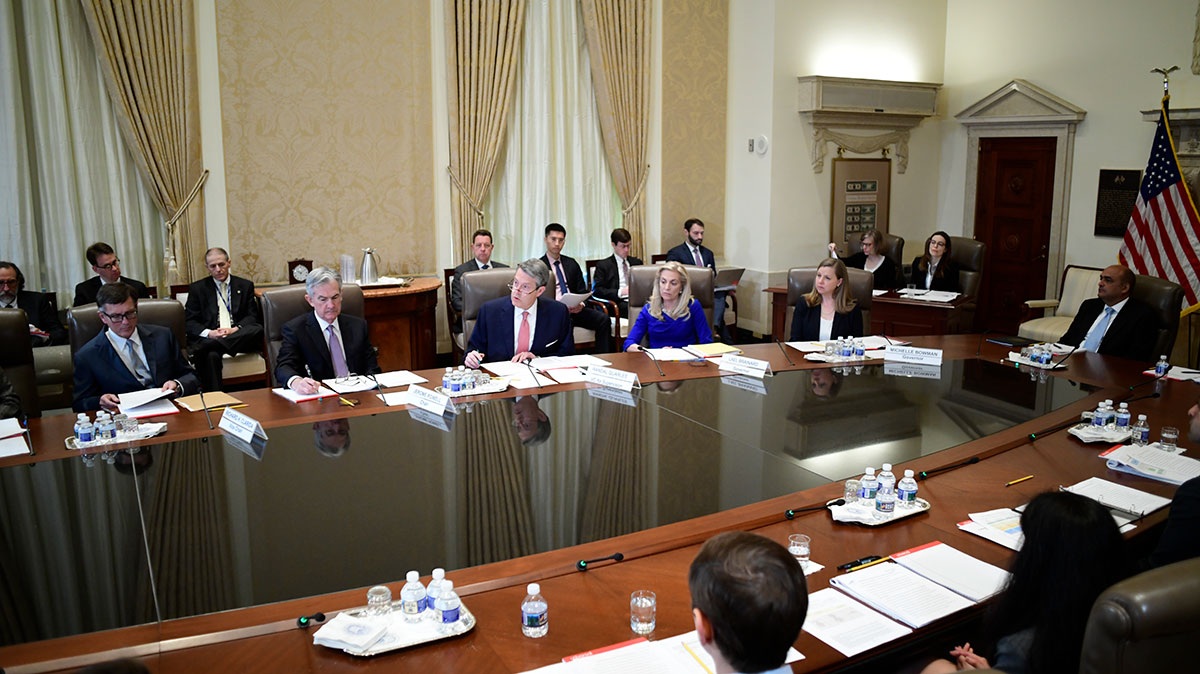
As you recall, the FOMC is comprised of:
The Board of Governors (maximum of seven members)
The President of the Federal Reserve Bank of New York (one individual)
Presidents of the Federal Reserve Regional Banks who
sit on the FOMC on a rotating basis (four individuals)
There can be fewer Board of Governors as some may resign during their 14-years appointed terms.
NOTE: The remaining eight members of the other Federal Reserve Regional Banks attend the meeting,
but are not voting members of the FOMC.
The Board of Governors (maximum of seven members)
The President of the Federal Reserve Bank of New York (one individual)
Presidents of the Federal Reserve Regional Banks who
sit on the FOMC on a rotating basis (four individuals)
There can be fewer Board of Governors as some may resign during their 14-years appointed terms.
NOTE: The remaining eight members of the other Federal Reserve Regional Banks attend the meeting,
but are not voting members of the FOMC.
| Board of Governors (7 members maximum) |
| Federal Open Market Committee (12 members maximum) |
| Federal Reserve Regional Banks (12 Bank Presidents) |
| GOAL 1: Maintaining an AMPLE supply of reserves by using Open Market Operations, the buying and selling of government securities. |
GOAL 1 shifts only the SUPPLY of RESERVES to
keep reserves ample and not limited nor abundant.
keep reserves ample and not limited nor abundant.
At the FOMC meeting, the committee decides the supply
of reserves by buying government securites (bonds) or
by selling government securities (bonds). If you remember this
mnemonic device, BUY means BIG and SELL means SMALL,
this will help you when you shift the supply curve (S) to the
right or to the left. Notice when you shift supply (S) to the
right or to the left, this changes the Q of reserves on the x axis
but does not change the interest rate up or down the y axis.
If the FOMC decides to increase the quantity of reserves
to keep reserves ample and not limited nor abundant, the
FOMC will BUY bonds, shifting the supply (S) of reserves to
the right (BIGGER amount of reserves). Notice as you shift
S on the graph to the right, the Q of Reserves on the x axis
gets BIGGER and there is no change in the interest rate along
the y axis.
If the FOMC decides to decrease the quantity of reserves to
keep reserves ample and not abundant, the FOMC will SELL
bonds, shifting the supply (S) of reserves to the left (SMALLER
amount of reserves). Notice as you shift S on the graph to the
left, the Q of Reserves on the x axis gets SMALLER and there is
no change in interest rates along the y axis.
This is similar to the Story of the Three Little Bears, describing
how one is too BIG (abundant reserves), one is too SMALL
(limited reserves), and one is JUST RIGHT (ample reserves).
of reserves by buying government securites (bonds) or
by selling government securities (bonds). If you remember this
mnemonic device, BUY means BIG and SELL means SMALL,
this will help you when you shift the supply curve (S) to the
right or to the left. Notice when you shift supply (S) to the
right or to the left, this changes the Q of reserves on the x axis
but does not change the interest rate up or down the y axis.
If the FOMC decides to increase the quantity of reserves
to keep reserves ample and not limited nor abundant, the
FOMC will BUY bonds, shifting the supply (S) of reserves to
the right (BIGGER amount of reserves). Notice as you shift
S on the graph to the right, the Q of Reserves on the x axis
gets BIGGER and there is no change in the interest rate along
the y axis.
If the FOMC decides to decrease the quantity of reserves to
keep reserves ample and not abundant, the FOMC will SELL
bonds, shifting the supply (S) of reserves to the left (SMALLER
amount of reserves). Notice as you shift S on the graph to the
left, the Q of Reserves on the x axis gets SMALLER and there is
no change in interest rates along the y axis.
This is similar to the Story of the Three Little Bears, describing
how one is too BIG (abundant reserves), one is too SMALL
(limited reserves), and one is JUST RIGHT (ample reserves).
IMPORTANT: Remember a shift in the supply (S) of reserves changes the Q of reserves on the x axis, but does
NOT change the short-term interest rate on the y axis, as the D for reserves has not changed.
NOT change the short-term interest rate on the y axis, as the D for reserves has not changed.
Goal 2 the Target Federal Funds Range -- Upper Limit and
Lower Limit communicates to the public the stance of
monetary policy.
Let's make this lesson on ample reserves easy by pretending
as if you are in charge of painting the lines on a roadway.
Lower Limit communicates to the public the stance of
monetary policy.
Let's make this lesson on ample reserves easy by pretending
as if you are in charge of painting the lines on a roadway.
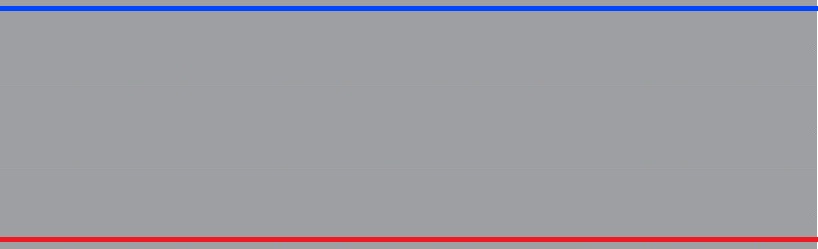
During the FOMC's meeting, the committee decides on the
Federal Funds Target Range-- Upper and Lower Limits. This
is similar to painting the lines next to the shoulders of the
road on both sides of the roadway. The blue line is the Upper
Limit and the red line is the Lower Limit for the Federal Funds
Rate.
Federal Funds Target Range-- Upper and Lower Limits. This
is similar to painting the lines next to the shoulders of the
road on both sides of the roadway. The blue line is the Upper
Limit and the red line is the Lower Limit for the Federal Funds
Rate.
Towards the end of the two-day FOMC meetings, the Board of Governors directs the New York Desk to buy or sell a certain
dollar amount of securities to keep reserves ample and then sets three administered rates to keep the Federal Funds Rate
in between the Upper Limit and the Lower Limit shown on the graph above. You will only have to know two administered rates.
dollar amount of securities to keep reserves ample and then sets three administered rates to keep the Federal Funds Rate
in between the Upper Limit and the Lower Limit shown on the graph above. You will only have to know two administered rates.
| Board of Governors Responsibilities |
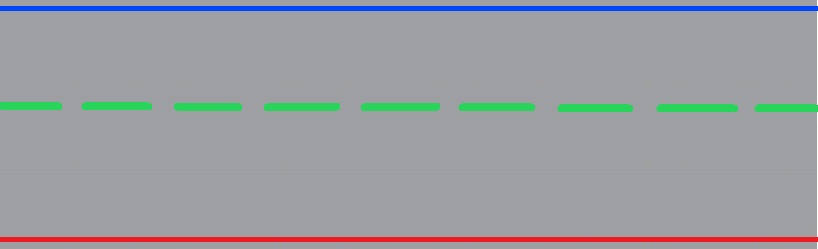
The dashed green line represents Interest on Reserve
Balances (IORB), and lies in between the Federal Funds Target
Range -- Upper Limit and the Lower Limit and is used to
influence the Federal Funds Rate (FFR).
Balances (IORB), and lies in between the Federal Funds Target
Range -- Upper Limit and the Lower Limit and is used to
influence the Federal Funds Rate (FFR).
| Administered Rate #1: Interest Rate on Reserve Balances |
This is the most important administered rate of monetary policy. Interest on Reserve Balances (IORB) is the interest rate
the Federal Reserve (Fed) pays commercial banks for depositing their reserves with the Federal Reserve. This rate is
administered by the Board of Governors to increase, decrease, or maintain the Federal Funds Rate (FFR), which is a market
rate as it is the interest rate that banks charge for borrowing reserves overnight. Remember, the market rate is determined by
the laws of supply and demand for those funds.
Also important is when the Federal Funds Rate (FFR) decreases, banks' lending tends to increase because it becomes less
expensive for banks to borrow from other banks. This tends to lower banks' interest rates for their consumers and businesses,
thus stimulating the economy. When the Federal Funds Rate (FFR) increases, banks' lending tends to decrease because it
becomes more expensive for banks to borrow from other banks. This tends to raise their own interest rates for their consumers
and businesses.
the Federal Reserve (Fed) pays commercial banks for depositing their reserves with the Federal Reserve. This rate is
administered by the Board of Governors to increase, decrease, or maintain the Federal Funds Rate (FFR), which is a market
rate as it is the interest rate that banks charge for borrowing reserves overnight. Remember, the market rate is determined by
the laws of supply and demand for those funds.
Also important is when the Federal Funds Rate (FFR) decreases, banks' lending tends to increase because it becomes less
expensive for banks to borrow from other banks. This tends to lower banks' interest rates for their consumers and businesses,
thus stimulating the economy. When the Federal Funds Rate (FFR) increases, banks' lending tends to decrease because it
becomes more expensive for banks to borrow from other banks. This tends to raise their own interest rates for their consumers
and businesses.
These terms might seem confusing at first, but you will get a better understanding of these as you
read through the lesson below:
Federal Funds TARGET RANGE -- Upper Limit and Lower Limit. (This is a RANGE and not a RATE!)
Federal Funds Rate (also known as the Policy Rate) -- is a market rate (policy rate) NOT an administered rate
by the Fed. Again, the Federal Funds Rate (FFR) is a market-determined Policy Rate (PR) and not one of the
Administered Rates you will learn below. On a daily basis, customers withdrawal money from their bank,
borrow from money from the bank, and deposit money into the bank. At the end of the day, some
banks might end the day with extra reserves, while others might end the day without enough reserves.
Because of this, banks end the day by balancing their books. If banks end the day without enough
reserves, these banks borrow from banks that have extra reserves at the end of the day.
On one hand, when banks have a shortfall of reserves, they BORROW (demand) money from other
banks that have excess reserves, this affects the DEMAND for reserves.
On the other hand, when banks have excess reserves they LOAN (supply) money at an interest rate to banks
that have a shortfall of reserves at the end of the day, this affects the SUPPLY for reserves.
This rate then is the market-driven Policy Rate which is called the Federal Funds Rate (PR = FFR)in the U.S.
Administered Rates -- are rates set by the Board of Governors at some point during the FOMC meetings to
influence the Policy Rate = Federal Funds Rate (PR = FFR). Administered rates are used to steer the economy by
influencing the PR = FFR in order to reach maximum employment and price stability as required by the
Dual Mandate.
Interest on Reserve Balances (IORB) -- is the #1 key tool of monetary policy. Banks no longer keep their extra
or excess reserves inside their vaults. Today the Fed pays banks interest to keep their reserves with the Federal
Reserve. If the Federal Reserve raises IORB rate, banks tend to keep more of their reserves with the Fed, meaning
banks have fewer reserves to lend to customers, decreasing economic activity in the economy. If the Fed lowers
the IORB rate, banks tend to lend more of their reserves to customers, increasing economic activity in the
economy.
Primary Credit Rate (PCR) -- is the interest rate set ABOVE the IORB rate. If creditworthy banks cannot borrow from
other banks at the FFR within the Federal Funds Market (supply and demand for funds), these banks can get more
reserves by borrowing from the Fed with few questions asked. Other banks that less credit worthy can borrow from
the Fed at the Secondary Credit Rate which is set higher than the Primary Credit Rate (PCR).
read through the lesson below:
Federal Funds TARGET RANGE -- Upper Limit and Lower Limit. (This is a RANGE and not a RATE!)
Federal Funds Rate (also known as the Policy Rate) -- is a market rate (policy rate) NOT an administered rate
by the Fed. Again, the Federal Funds Rate (FFR) is a market-determined Policy Rate (PR) and not one of the
Administered Rates you will learn below. On a daily basis, customers withdrawal money from their bank,
borrow from money from the bank, and deposit money into the bank. At the end of the day, some
banks might end the day with extra reserves, while others might end the day without enough reserves.
Because of this, banks end the day by balancing their books. If banks end the day without enough
reserves, these banks borrow from banks that have extra reserves at the end of the day.
On one hand, when banks have a shortfall of reserves, they BORROW (demand) money from other
banks that have excess reserves, this affects the DEMAND for reserves.
On the other hand, when banks have excess reserves they LOAN (supply) money at an interest rate to banks
that have a shortfall of reserves at the end of the day, this affects the SUPPLY for reserves.
This rate then is the market-driven Policy Rate which is called the Federal Funds Rate (PR = FFR)in the U.S.
Administered Rates -- are rates set by the Board of Governors at some point during the FOMC meetings to
influence the Policy Rate = Federal Funds Rate (PR = FFR). Administered rates are used to steer the economy by
influencing the PR = FFR in order to reach maximum employment and price stability as required by the
Dual Mandate.
Interest on Reserve Balances (IORB) -- is the #1 key tool of monetary policy. Banks no longer keep their extra
or excess reserves inside their vaults. Today the Fed pays banks interest to keep their reserves with the Federal
Reserve. If the Federal Reserve raises IORB rate, banks tend to keep more of their reserves with the Fed, meaning
banks have fewer reserves to lend to customers, decreasing economic activity in the economy. If the Fed lowers
the IORB rate, banks tend to lend more of their reserves to customers, increasing economic activity in the
economy.
Primary Credit Rate (PCR) -- is the interest rate set ABOVE the IORB rate. If creditworthy banks cannot borrow from
other banks at the FFR within the Federal Funds Market (supply and demand for funds), these banks can get more
reserves by borrowing from the Fed with few questions asked. Other banks that less credit worthy can borrow from
the Fed at the Secondary Credit Rate which is set higher than the Primary Credit Rate (PCR).
| Quick Review of the FOMC and the Board of Governors of the Federal Reserve System |
The FOMC sets a Target Federal Funds Range Range -- Upper Limit and Lower Limit for where it wants the Federal
Funds Rate (PR = FFR) to fall between these two limits. The FOMC can do one of the following with this range (shown as
the shoulders of the road above) -- raise the range, lower the range, or maintain the range. It is the setting of this range
that the Fed uses to communicate its monetary policy position. This is what is entitled "forward guidance," where the
Fed gives the public a heads up on the direction of the economy. Is the economy slowing down, heating up, or just
staying the same? Remember from a previous lesson, the Fed's responsibility directed by Congress is the Dual Mandate
of maximum employment and stable prices.
Funds Rate (PR = FFR) to fall between these two limits. The FOMC can do one of the following with this range (shown as
the shoulders of the road above) -- raise the range, lower the range, or maintain the range. It is the setting of this range
that the Fed uses to communicate its monetary policy position. This is what is entitled "forward guidance," where the
Fed gives the public a heads up on the direction of the economy. Is the economy slowing down, heating up, or just
staying the same? Remember from a previous lesson, the Fed's responsibility directed by Congress is the Dual Mandate
of maximum employment and stable prices.
When the FOMC decides to increase, decrease, or maintain the
Federal Funds Target Range -- Upper Limit and Lower Limit, the
Board of Governors uses its power to set the administered rate
of Interest on Reserve Balances (IORB) paid to commercial banks
for keeping their reserves at the Fed. The IORB rate follows
in the direction that Upper Limit and Lower Limit increases,
decreases, or remains the same that the FOMC decides during the
meeting.
Federal Funds Target Range -- Upper Limit and Lower Limit, the
Board of Governors uses its power to set the administered rate
of Interest on Reserve Balances (IORB) paid to commercial banks
for keeping their reserves at the Fed. The IORB rate follows
in the direction that Upper Limit and Lower Limit increases,
decreases, or remains the same that the FOMC decides during the
meeting.
- - - - - - - - - - - - - - - - - - - - - - - - - - - - - - - - - - - - - - - - - - - -
- - - - - - - - - - - - - - - - - - - - - - - - - - - - - - - - - - - - - - - - - - - -
- - - - - - - - - - - - - - - - - - - - - - - - - - - - - - - - - - - - - - - - - - - -
- - - - - - - - - - - - - - - - - - - - - - - - - - - - - - - - - - - - - - - - - - - -
If you look at this as if it is a roadway, the Interest on Reserve Balances the Fed pays to banks for depositing their reserves
with the Federal Reserve. It is represented by a green passing lane dash line you see on a roadway, as banks in good
standing can still borrow from the Federal Reserve at a higher administered rate that you will learn about soon.
with the Federal Reserve. It is represented by a green passing lane dash line you see on a roadway, as banks in good
standing can still borrow from the Federal Reserve at a higher administered rate that you will learn about soon.
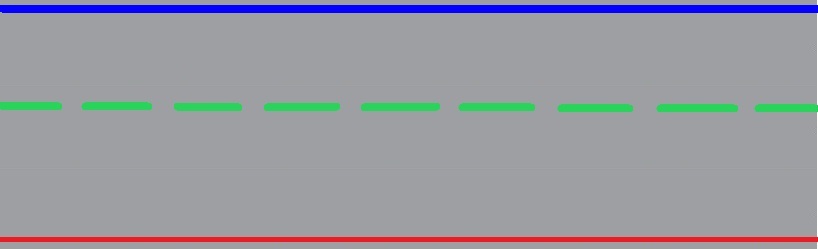
Notice that the Upper Limit = Primary Credit Rate is now shown
as a thicker blue line as this rate, along with the Interest on
Reserve Balances (IORB) are both administered rates set by
the Board of Governors at the FOMC meeting.
as a thicker blue line as this rate, along with the Interest on
Reserve Balances (IORB) are both administered rates set by
the Board of Governors at the FOMC meeting.
| Administered Rate #2: Primary Credit Rate |
To make this simple, on March 16, 2020, that the Primary Credit Rate, an administered rate set by the Board of Governors is going to be
equal to the Upper Limit of the Federal Funds Target Range set by the FOMC. Thus, Primary Credit Rate (PCR) = Upper Limit from now on.
equal to the Upper Limit of the Federal Funds Target Range set by the FOMC. Thus, Primary Credit Rate (PCR) = Upper Limit from now on.
The Federal Reserve sets the Primary Credit Rate equal to the
Federal Funds Target Range -- Upper Limit because banks would
not borrow or lend at a rate higher that they can get directly from
the Fed's Primary Credit Rate.
Federal Funds Target Range -- Upper Limit because banks would
not borrow or lend at a rate higher that they can get directly from
the Fed's Primary Credit Rate.
If you look at this as if it is a roadway, the Interest on Reserve
Balances the Fed pays to banks for depositing their reserves
with the Fed is shown as a passing lane dash line you see on a
roadway, as banks in good standing can still pass that line and
borrow from the Fed at the higher Primary Credit Rate that is
.10% or 10 basis points higher than the Interest on Reserve
Balances (IORB).
Balances the Fed pays to banks for depositing their reserves
with the Fed is shown as a passing lane dash line you see on a
roadway, as banks in good standing can still pass that line and
borrow from the Fed at the higher Primary Credit Rate that is
.10% or 10 basis points higher than the Interest on Reserve
Balances (IORB).
Primary Credit Rate -- is the interest rate the Fed charges on loans to banks through its discount window. This rate is set
higher than the IORB rate during the FOMC meetings and is set at a premium rate above the Federal Funds Rate (FFR) to
discourage its use as a primary funding source. The Fed is a "lender of last resort," meaning banks should borrow from
other banks in the Federal Funds market at the Federal Funds Rate (FFR) and not come to the Fed to borrow money. If
banks do go to the Fed to borrow money, they will pay a higher rate than the Federal Funds Rate (FFR). The Primary
Credit Rate does provide liquidity to banks and stabilizing the financial system during times of crisis.
higher than the IORB rate during the FOMC meetings and is set at a premium rate above the Federal Funds Rate (FFR) to
discourage its use as a primary funding source. The Fed is a "lender of last resort," meaning banks should borrow from
other banks in the Federal Funds market at the Federal Funds Rate (FFR) and not come to the Fed to borrow money. If
banks do go to the Fed to borrow money, they will pay a higher rate than the Federal Funds Rate (FFR). The Primary
Credit Rate does provide liquidity to banks and stabilizing the financial system during times of crisis.
- - - - - - - - - - - - - - - - - - - - - - - - - - - - - - - - - - - - - - - - - - - -
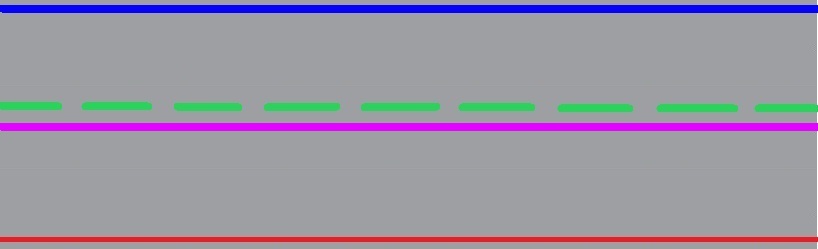
Notice the solid purple line in the roadway that represents the
Federal Funds Rate (FFR), which as you recall is the rate that
banks borrow from other banks overnight or over a short period
of time. This is the rate that the FOMC and Board of Governors
influences through monetary policy.
Federal Funds Rate (FFR), which as you recall is the rate that
banks borrow from other banks overnight or over a short period
of time. This is the rate that the FOMC and Board of Governors
influences through monetary policy.
| The Federal Funds Rate (FFR) is a Policy- and Market-Driven Rate and NOT an Administered Rate |
All in all, the FOMC sets the Federal Reserve Target Range -- Upper Limit and Lower Limit and directs the New York Desk
on keeping reserves ample. The Board of Governors sets the two administered rates of Interest on Reserve Balances (IORB)
and the Primary Credit Rate (PCR) to keep the Federal Funds Rate (FFR), a policy rate and market rate, within the Upper Limit
and Lower Limit.
on keeping reserves ample. The Board of Governors sets the two administered rates of Interest on Reserve Balances (IORB)
and the Primary Credit Rate (PCR) to keep the Federal Funds Rate (FFR), a policy rate and market rate, within the Upper Limit
and Lower Limit.
The FFR follows the IORB because the IORB acts as the Fed's
main #1 tool for guiding the FFR within its target range.
main #1 tool for guiding the FFR within its target range.
Looking at the graph to the left, notice when the FOMC raises the
Federal Funds Target Range -- Upper Limit and Lower Limit and
the Board of Governors raise the IORB rate (an administered rate).
this raises the FFR (a policy rate) and visa versa.
Why does this happen?
Raising the IORB rate raises the FFR because it provides more
incentive for banks to hold reserves at the Federal Reserve and
provides less of an incentive for banks to lend to other banks in
the open market at the FFR.
Lowering the IORB rate lowers the FFR because it provides less
incentive for banks to hold reserves at the Federal Reserve and
provides more of an incentive for banks to lend to other banks in
the open market at the FFR.
Federal Funds Target Range -- Upper Limit and Lower Limit and
the Board of Governors raise the IORB rate (an administered rate).
this raises the FFR (a policy rate) and visa versa.
Why does this happen?
Raising the IORB rate raises the FFR because it provides more
incentive for banks to hold reserves at the Federal Reserve and
provides less of an incentive for banks to lend to other banks in
the open market at the FFR.
Lowering the IORB rate lowers the FFR because it provides less
incentive for banks to hold reserves at the Federal Reserve and
provides more of an incentive for banks to lend to other banks in
the open market at the FFR.
| The FED uses Contractionary Monetary Policy to Slow the Economy The FED uses Expansionary Monetary Policy to Speed Up the Economy |
| How Does Monetary Policy Affect Short-Term and Long-Term Interest Rates? |
Notice on the top two graphs below, the FED has been using contractionary monetary policy by raising the
Interest on Reserve Balances (IORB) to slow the economy down because of higher expected inflation and a
strong labor market. On the bottom two graphs you can see because of the FED's contractionary monetary policy
action, along with other occurrences in the economy, short-term interest rates and long-term interest rates in the
economy started to rise. An increase in short-term and long-term interest rates has a propensity to
decrease consumption and investment in the economy which causes aggregate demand to decrease.
Then notice as the Fed starts using expansionary policy, short-term interest rates and long-term interest rates in
the economy started to fall. A decrease in short-term and long-term interest rates has a propensity to increase
consumption and investment in the economy which causes aggregate demand to increase.
Interest on Reserve Balances (IORB) to slow the economy down because of higher expected inflation and a
strong labor market. On the bottom two graphs you can see because of the FED's contractionary monetary policy
action, along with other occurrences in the economy, short-term interest rates and long-term interest rates in the
economy started to rise. An increase in short-term and long-term interest rates has a propensity to
decrease consumption and investment in the economy which causes aggregate demand to decrease.
Then notice as the Fed starts using expansionary policy, short-term interest rates and long-term interest rates in
the economy started to fall. A decrease in short-term and long-term interest rates has a propensity to increase
consumption and investment in the economy which causes aggregate demand to increase.
Short-term Interest Rates
Long-term Interest Rates
Credit Card Rates, 48-Month Auto Loan Rates, and Prime Rate
30-Year Fixed Mortgage Rate
| The Final Construction of the Roadway for Monetary Policy (2000 - 2025) |
In the end, the FOMC and the Board of Governors work on monetary policy influences the Federal Funds Rate (PR = FFR) which
ultimately influences the rates banks charge their customers. A higher PR = FFR increases borrowing rates which decreases the
amount of loans, which slows down consumption and investment in the economy. A lower PR = FFR lowers borrowing rates, which
increases the amount of loans, which speeds up consumption and investment in the economy.
ultimately influences the rates banks charge their customers. A higher PR = FFR increases borrowing rates which decreases the
amount of loans, which slows down consumption and investment in the economy. A lower PR = FFR lowers borrowing rates, which
increases the amount of loans, which speeds up consumption and investment in the economy.
- - - - - - - - - - - - - - - - - - - - - - - - - - - - - - - - - - - - - - - - - - - -
- - - - - - - - - - - - - - - - - - - - - - - - - - - - - - - - - - - - - - - - - - - -
| Terms to Know Before Learning about the Ample Reserves Framework |
- - - - - - - - - - - - - - - - - - - - - - - - - - - - - - - - - - - - - - - - - - - -
| 2008 - 2019 |
| The Federal Open Market Committee (FOMC) conducts monetary policy by setting the target range upper limit and lower limit for the federal funds rate (FFR). The federal funds rate (FFR) is the interest rate banks and other institutions charge each other for overnight loans. The FFR is also known as the Policy Rate (PR). |
The FOMC decision is based upon the data discussed at the
FOMC meeting. If the Fed decides to RAISE the Federal
Funds Target Range -- Upper and Lower Limits, this indicates
Fed's concern is the current inflation and/or expected inflation
rate is moving too high relative to its 2% target inflation rate.
By RAISING the FFR target range, the Fed tries to make
borrowing more expensive. As short-term borrowing costs rise,
indirectly, this influences long-term borrowing costs. Individuals',
households', and business' borrowing decreases which decreases
aggregate demand, slowing the economy down.
The FOMC makes a decision to LOWER the Federal Funds
Target Range -- Upper and Lower Limits if the Fed's data
indicates current falling employment and/or expected employment
and/or output data is declining. By LOWERING interest rates,
the Fed makes borrowing less expensive. Individuals', households',
and business' borrowing has a propensity to increase which
increases aggregate demand, speeding up the economy.
The FOMC makes a decision to take a "wait-and-see" approach if the
Fed's outlook about stable prices and maximum employment (Dual
Mandate) is in good enough shape, it waits until the next meeting to
make a decision to raise, lower, or maintain the FFR target range.
FOMC meeting. If the Fed decides to RAISE the Federal
Funds Target Range -- Upper and Lower Limits, this indicates
Fed's concern is the current inflation and/or expected inflation
rate is moving too high relative to its 2% target inflation rate.
By RAISING the FFR target range, the Fed tries to make
borrowing more expensive. As short-term borrowing costs rise,
indirectly, this influences long-term borrowing costs. Individuals',
households', and business' borrowing decreases which decreases
aggregate demand, slowing the economy down.
The FOMC makes a decision to LOWER the Federal Funds
Target Range -- Upper and Lower Limits if the Fed's data
indicates current falling employment and/or expected employment
and/or output data is declining. By LOWERING interest rates,
the Fed makes borrowing less expensive. Individuals', households',
and business' borrowing has a propensity to increase which
increases aggregate demand, speeding up the economy.
The FOMC makes a decision to take a "wait-and-see" approach if the
Fed's outlook about stable prices and maximum employment (Dual
Mandate) is in good enough shape, it waits until the next meeting to
make a decision to raise, lower, or maintain the FFR target range.
At the FOMC meeting, the Federal Funds Target Range -- Upper Limit and Lower Limit is decided.
| On March 26, 2020, the Board reduced reserve requirement ratios to 0%, effectively eliminating the need for banks to distinguish between "required" and "excess" balances. Ask Google AI 4 |
| The Federal Reserve implements policy by using the Interest on Reserve Balances (IORB) rate to steer the Federal Funds EFFECTIVE Rate (FFR) in between the FOMC’s Target Range -- Upper Limit and Lower Limit. |
Prior to July 2021, the Fed paid
interest on both required reserves
and excess reserves (shown with
small black lines). By paying interest
to banks this incentivizes banks to
keep their reserves at the Fed, which
creates ample reserves, creating a
method for the Fed to control short-
term interest rates with a propensity
(tendancy) to influence long-term rates.
On July 29, 2021, the The Board of
Directors of the Federal Reserve
System officially discontinued the
above, when it replaced it with a single
rate entitled, "Interest Paid on Reserve
Balances (IORB)." This is now the
#1 Key monetary policy of the Federal
Reserve System.
interest on both required reserves
and excess reserves (shown with
small black lines). By paying interest
to banks this incentivizes banks to
keep their reserves at the Fed, which
creates ample reserves, creating a
method for the Fed to control short-
term interest rates with a propensity
(tendancy) to influence long-term rates.
On July 29, 2021, the The Board of
Directors of the Federal Reserve
System officially discontinued the
above, when it replaced it with a single
rate entitled, "Interest Paid on Reserve
Balances (IORB)." This is now the
#1 Key monetary policy of the Federal
Reserve System.
| When you touch blue (upper limit) and red (lower limit) lines on the FRED graph above, notice the spread between the two has been 0.25% or 25 basis points for quite some time. |
| "From this point forward, just like great actors on the silver screen, in economics you must memorize and pay particular attention to your lines." --Steven Reff (2025)-- |
| In 2006, both Bernanke and Hubbard were leading candidates to succeed Alan Greenspan as the Chairman of the Federal Reserve. When President George W. Bush chose Bernanke for the position, CBS students created the video to portray this rivalry between Hubbard and Bernanke." Google ASK AI 1 |
| "The Federal Reserve officially announced its decision to maintain an "Ample Reserves Regime" on January 30, 2019. While the Fed had effectively operated under this framework since the 2008 financial crisis, this announcement formalized it as the long-run operating procedure for monetary policy." Ask Google AI 3 |
| Standard 14: Limited and Ample Reserves Framework (2006 - 2019) |
| 2006 |
| 2019 The Beginning of the Ample Reserves Regime |
| 2020 |
| Effective July 29, 2021, the Federal Reserve stopped paying separate interest rates on required (IORR) and excess (IOER) reserves and transitioned to paying a single Interest on Reserve Balances (IORB) rate. Ask Google AI 4 |
| 2021 |
eVideo of Chairman Ben Bananke testifying before
Congress October 2008: (1:18 minutes)
Congress October 2008: (1:18 minutes)
Ben Bernanke was sworn in as the 14th Chairman of the Board of Governors of the Federal
Reserve System on February 1, 2006. Prior to this, both Ben Bernanke (from Princeton) and
Glenn Hubbard (from the Columbia Business School) were both vying for the job of Chairman
of the Board of the Federal Reserve System.
Reserve System on February 1, 2006. Prior to this, both Ben Bernanke (from Princeton) and
Glenn Hubbard (from the Columbia Business School) were both vying for the job of Chairman
of the Board of the Federal Reserve System.
eVideo of Chairman Glenn Hubbard testifying
in a 2011 interview: (5:02 minutes)
in a 2011 interview: (5:02 minutes)

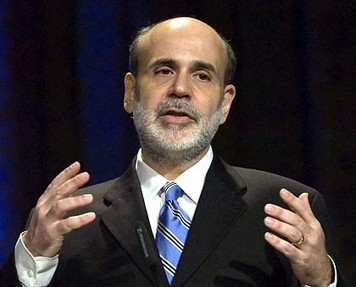
| Below is a funny "YouTube video, often titled "Every Breath Bernanke Takes," is a 2006 musical parody created by students at the Columbia Business School. You will hear CBS throughout the video -- Columbia Business School. It spoofs the 1983 song "Every Breath You Take" by The Police to lampoon the perceived rivalry between Ben Bernanke and R. Glenn Hubbard, the then-dean of Columbia Business School, whose students wanted Glenn Hubbard to be the next Fed Chair. |
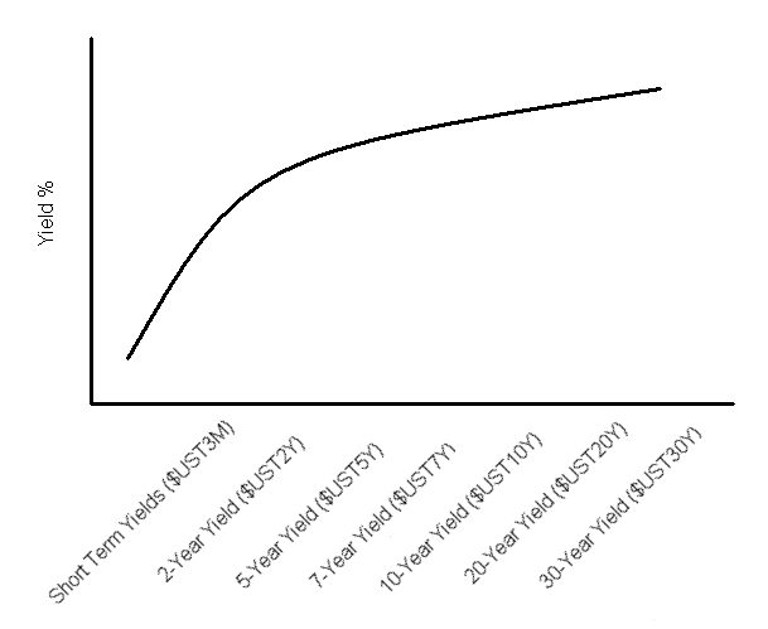
A typical yield curve shows that
short-term yields are less than
long-term yields.
short-term yields are less than
long-term yields.
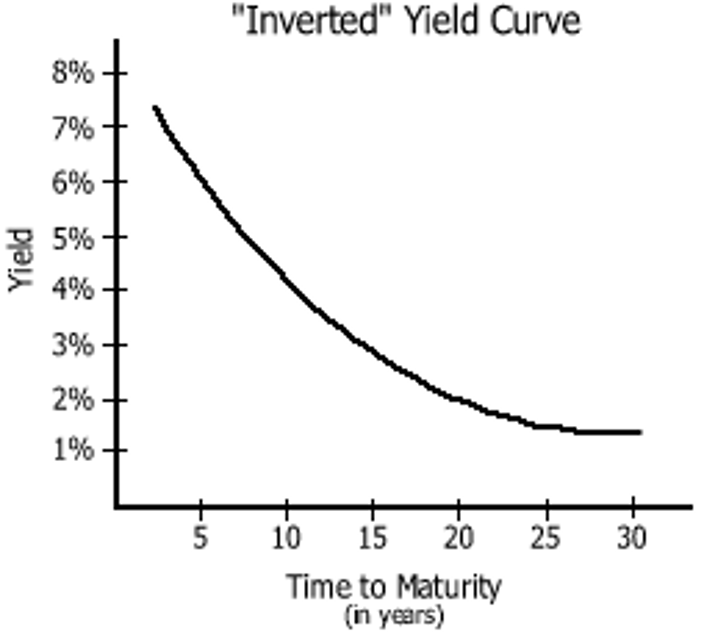
An inverted yield curve is when
short-term yields are greater than
long-term yields.
short-term yields are greater than
long-term yields.
When investors fear a near-term economic slowdown, they sell
short-term assets and rush to buy long-term government bonds.
Because bond prices and yields move in opposite directions, this
surge in demand drives long-term bond prices up and their
yields down.
short-term assets and rush to buy long-term government bonds.
Because bond prices and yields move in opposite directions, this
surge in demand drives long-term bond prices up and their
yields down.

"As excess reserves decline, financial
conditions normalize, and banks adapt to
the new regime, we expect the interest rate
paid on reserves to become an effective
instrument for controlling the federal funds
rate."
conditions normalize, and banks adapt to
the new regime, we expect the interest rate
paid on reserves to become an effective
instrument for controlling the federal funds
rate."
Less than one month after the trial test of Ample Reserves began, Chairman Ben Bernanke made
one of the first public statements about the beginning of an Ample Reserves Regime happened in
January, 13, 2009.
one of the first public statements about the beginning of an Ample Reserves Regime happened in
January, 13, 2009.
| Several major central banks have shifted to an ample reserves framework (often called a "floor system") since the 2008 global financial crisis. In this regime, the central bank maintains a high level of reserves so that short-term interest rates are steered primarily through administered rates rather than daily open market operations. Central Banks Using Ample Reserves or Floor Systems Federal Reserve (United States): Formally adopted the Ample Reserves Framework in January 2019. European Central Bank (Eurozone): Operates a floor system with ample liquidity; recently announced a transition to a "soft floor" or demand-driven framework. Bank of England (United Kingdom): Historically used a floor system and is transitioning to a demand- driven "ample" reserves framework where reserves are provided via repo operations. Bank of Canada: Transitioned from a corridor system to a floor system during the pandemic. Reserve Bank of New Zealand: Transitioned to a floor system following the COVID-19 crisis. Reserve Bank of Australia: Effectively operating a floor system due to high liquidity; announced plans in 2024 to move to an "ample reserves system with full allotment". Bank of Japan: Operates a framework similar to a floor system characterized by a very large quantity of reserves. Norges Bank (Norway): Uses a floor system with quotas (tiering) to manage reserves. Google ASK AI: 7 |
- - - - - - - - - - - - - - - - - - - - - - - - - - - - - - - - - - - - - - - - - - - -
- - - - - - - - - - - - - - - - - - - - - - - - - - - - - - - - - - - - - - - -
| eVideo on how to read the FOMC Statement and the Board of Governors' Implementation Notes (12:53 min.) |
Robin Williams talked about poetry in the movie, "The Dead Poet Society." I took his words
and put them into economic terms about all of the policies the Fed used to implement that
still appear in economics textbooks today, and yet are no longer used within the relatively
NEW Ample Reserves Regime used by the current Federal Reserve that you will learn in the
lessons above.
and put them into economic terms about all of the policies the Fed used to implement that
still appear in economics textbooks today, and yet are no longer used within the relatively
NEW Ample Reserves Regime used by the current Federal Reserve that you will learn in the
lessons above.
| In this short video clip, every time you hear the words, Poem, Poetry, or J. Evan Pritchard, say to yourself OLD MONETARY POLICY. At the beginning Robin Williams draws a graph, similar to how we draw graphs in economics. |
| Again, every time you hear the words, Poem, Poetry, or J. Evans Pritchard, say to yourself OLD Monetary Policy. |
| 3:56 minutes |
| Standard 14: Video on Moving from Limited to Ample Reserves |
- - - - - - - - - - - - - - - - - - - - - - - - - - - - - - - - - - - - - - - -
| "A regime is a system of government, administration, or management, often referring to the specific rules and power structures that define how a state is managed. It carries a negative connotation because it is frequently used to imply that a government is authoritarian, undemocratic, illegitimate, or oppressive, rather than a legitimate, elected government." Ask Google AI 3A |
| The Federal Reserve implements policy by using the Interest on Reserve Balances (IORB) rate to steer the Federal Funds EFFECTIVE Rate (FFR) in between the FOMC’s Target Range -- Upper Limit and Lower Limit. |
On October 6, 2008, the Federal Reserve
began paying interest on Interest on
Required Reserves (IORR) and Excess
Reserves (IOER) (shown with black dashed
lines) and ended on July 2021, when the
Fed combined these two payments into a
single payment called, Interest on Reserve
Balances (IORB), (shown in a solid green
line), which is now THE PRIMARY TOOL
OF MONETARY POLICY.
On the FRED graph to the left, notice as
you touch the blue, red, and green lines,
notice the spread between the Federal
Funds Target Range -- upper limit and
lower limit is only 0.25% or 25 basis points
and the spread between the upper limit
and the payment of Interest on Reserve
Balances (IORB) is a mere 0.10% or
10 basis points. These spreads have not
change since July 2021 through 2026.
began paying interest on Interest on
Required Reserves (IORR) and Excess
Reserves (IOER) (shown with black dashed
lines) and ended on July 2021, when the
Fed combined these two payments into a
single payment called, Interest on Reserve
Balances (IORB), (shown in a solid green
line), which is now THE PRIMARY TOOL
OF MONETARY POLICY.
On the FRED graph to the left, notice as
you touch the blue, red, and green lines,
notice the spread between the Federal
Funds Target Range -- upper limit and
lower limit is only 0.25% or 25 basis points
and the spread between the upper limit
and the payment of Interest on Reserve
Balances (IORB) is a mere 0.10% or
10 basis points. These spreads have not
change since July 2021 through 2026.
| "The Federal Reserve effectively started using an ample reserves framework in October 2008, when it began paying interest on reserve balances (IORB) at the height of the financial crisis. While the official, explicit adoption of this framework was announced later in 2019, the necessary structural changes—massive expansion of reserves and the shift from "scarce" or "limited" reserves—began with liquidity programs in late 2008." Ask Google AI 1 |
| "The Federal Reserve effectively began operating under an ample reserves framework (also known as a floor system) in October 2008. While the Federal Open Market Committee (FOMC) did not "officially" announce its intent to maintain this framework in the long run until January 2019, it has been the de facto operational regime since the 2008 financial crisis." Ask Google AI 2 |
| 2008 - 2019 |
| History of the Ample Reserves Framework (2008 - 2019) |
| 2008 |
- - - - - - - - - - - - - - - - - - - - - - - - - - - - - - - - - - - - - - - - - - - -
| 2009 |
| A History Lesson on U.S. Monetary Policy (2003 - 2009) |
| Prior to January 9, 2003 |
The Post-2003 Solution: Above-Market Pricing & "No
Questions Asked"
On January 9, 2003, the Fed discontinued its old
"adjustment credit" program and launched the Primary
Credit Facility (the modern name for the discount window),
explicitly setting the PRIMARY CREDIT RATE ABOVE the
FEDERAL FUNDS TARGET RATE (initially by 100 basis
points). The PRIMARY CREDIT RATE became a penalty rate.
There are times the Federal Reserve at times uses the term
"Discount Rate" to refer to the PRIMARY CREDIT RATE.
However, after the Board of Governors of the Federal
Reserve meets and releases its Implementation notes to
the press, it uses the term PRIMARY CREDIT RATE -- i.e.
The Board of Governors of the Federal Reserve System
voted unanimously to approve a 1/4 percentage point or
25 basis points increase in the PRIMARY CREDIT RATE to
4.0 percent, effective September 17, 2026.
Questions Asked"
On January 9, 2003, the Fed discontinued its old
"adjustment credit" program and launched the Primary
Credit Facility (the modern name for the discount window),
explicitly setting the PRIMARY CREDIT RATE ABOVE the
FEDERAL FUNDS TARGET RATE (initially by 100 basis
points). The PRIMARY CREDIT RATE became a penalty rate.
There are times the Federal Reserve at times uses the term
"Discount Rate" to refer to the PRIMARY CREDIT RATE.
However, after the Board of Governors of the Federal
Reserve meets and releases its Implementation notes to
the press, it uses the term PRIMARY CREDIT RATE -- i.e.
The Board of Governors of the Federal Reserve System
voted unanimously to approve a 1/4 percentage point or
25 basis points increase in the PRIMARY CREDIT RATE to
4.0 percent, effective September 17, 2026.
The Pre-2003 Problem: Subsidized Rates & Stigma
On January 9, 2003, the Federal Reserve restructured its
discount window to replace its legacy "adjustment credit"
program with primary credit and secondary credit programs.
Today, the Fed still uses the phrase "discount rate", but it
now specifically refers to the Discount Window Primary
Credit Rate.
It was historically called the "Discount Rate" because the
credit took the form of discounting a short-term note.
On January 9, 2003, the Federal Reserve restructured its
discount window to replace its legacy "adjustment credit"
program with primary credit and secondary credit programs.
Today, the Fed still uses the phrase "discount rate", but it
now specifically refers to the Discount Window Primary
Credit Rate.
It was historically called the "Discount Rate" because the
credit took the form of discounting a short-term note.
| Post January 9, 2003 |
- - - - - - - - - - - - - - - - - - - - - - - - - - - - - - - - - - - - - - - - - - - -
| 2009 |
- - - - - - - - - - - - - - - - - - - - - - - - - - - - - - - - - - - - - - - - - - - -
| 2019 - 2026 |
- - - - - - - - - - - - - - - - - - - - - - - - - - - - - - - - - - - - - - - - - - - -
| 2008 - 2015 |
Students should know from December 2008 - December 2015 (7 years), the Federal Reserve kept interest rates near zero,
a monetary policy known as ZIRP -- Zero Interest Rate Policy. What took so long for the economy to pick up when
the Federal Funds Rate was so low?
a monetary policy known as ZIRP -- Zero Interest Rate Policy. What took so long for the economy to pick up when
the Federal Funds Rate was so low?
Students should know from December 2008 - December 2015 (7 years), the Federal Reserve kept interest rates near zero,
a monetary policy know as ZIRP -- Zero Interest Rate Policy. Why didn't the economy start to pick up when
the Federal Funds Rate was so low?
Google AI:
Why Demand for Loans Collapse?
• Having just experienced a massive housing market collapse and wealth destruction, households and firms focused
heavily on paying down existing debt rather than taking on new loans.
• Firms saw minimal consumer demand. Without expectations for future revenue growth, firms had no incentive to
borrow capital to expand factories or hire employees, regardless of how inexpensive interest rates were..
• With home values and asset prices depressed, consumers lost their primary source of collateral, removing the ability
to take out home equity lines of credit or refinance effectively.
Why did Supply of Loans Collapse?
• Banks experienced massive losses from toxic subprime mortgages in 2008. In response, they drastically tightened their
credit requirements, meaning only the most well-capitalized firms and individuals with pristine credit
scores could qualify for loans.
• The Liquidity Trap: When interest rates are near zero, the opportunity cost of holding cash disappears. Banks preferred
to accumulate excess reserves and hold safe liquidity rather than risk lending to struggling consumers or volatile
businesses. Remember banks were receiving Interest on Reserve Balances by holding their reserves at the Federal
Reserve.
A 0% central bank policy rate did not mean 0% consumer loans. Commercial interest rates for credit cards, auto loans,
and mortgages remained notably higher to account for economic risk.
a monetary policy know as ZIRP -- Zero Interest Rate Policy. Why didn't the economy start to pick up when
the Federal Funds Rate was so low?
Google AI:
Why Demand for Loans Collapse?
• Having just experienced a massive housing market collapse and wealth destruction, households and firms focused
heavily on paying down existing debt rather than taking on new loans.
• Firms saw minimal consumer demand. Without expectations for future revenue growth, firms had no incentive to
borrow capital to expand factories or hire employees, regardless of how inexpensive interest rates were..
• With home values and asset prices depressed, consumers lost their primary source of collateral, removing the ability
to take out home equity lines of credit or refinance effectively.
Why did Supply of Loans Collapse?
• Banks experienced massive losses from toxic subprime mortgages in 2008. In response, they drastically tightened their
credit requirements, meaning only the most well-capitalized firms and individuals with pristine credit
scores could qualify for loans.
• The Liquidity Trap: When interest rates are near zero, the opportunity cost of holding cash disappears. Banks preferred
to accumulate excess reserves and hold safe liquidity rather than risk lending to struggling consumers or volatile
businesses. Remember banks were receiving Interest on Reserve Balances by holding their reserves at the Federal
Reserve.
A 0% central bank policy rate did not mean 0% consumer loans. Commercial interest rates for credit cards, auto loans,
and mortgages remained notably higher to account for economic risk.
| 2016 - 2019 |
ZIRP lasted through most of President Obama's two terms until early 2016 when the Federal Reserve began raising the
Federal Funds Target Range Upper and Lower Limits. At the beginning of the first Trump Administration, ZIRP -- Zero
Interest Rate Policy ended and from January 2017 through July 2019, the Federal Reserve raised the Federal Funds Target
Upper and Lower Limits 7 times.
Federal Funds Target Range Upper and Lower Limits. At the beginning of the first Trump Administration, ZIRP -- Zero
Interest Rate Policy ended and from January 2017 through July 2019, the Federal Reserve raised the Federal Funds Target
Upper and Lower Limits 7 times.
Why did this occur?
Google AI
• The U.S. economy was expanding at a steady pace, and the labor market was approaching maximum employment.
Unemployment rates dropped significantly (reaching 4.1% by late 2017), and the Fed wanted to avoid an "overheated"
economy.
• Following years of keeping interest rates near zero after the 2008 financial crisis, the Fed needed to preemptively
ward off inflation. Raising rates gradually helped guide inflation safely toward the central bank's 2% symmetric target.
• By raising rates during periods of economic health, the Fed rebuilt room to cut interest rates in the future if a new
recession or economic downturn were to occur.
Google AI
• The U.S. economy was expanding at a steady pace, and the labor market was approaching maximum employment.
Unemployment rates dropped significantly (reaching 4.1% by late 2017), and the Fed wanted to avoid an "overheated"
economy.
• Following years of keeping interest rates near zero after the 2008 financial crisis, the Fed needed to preemptively
ward off inflation. Raising rates gradually helped guide inflation safely toward the central bank's 2% symmetric target.
• By raising rates during periods of economic health, the Fed rebuilt room to cut interest rates in the future if a new
recession or economic downturn were to occur.
In 2005 the word was first mentioned by journalist
Ben Hammersley. In this music video in 2006, this
was towards the beginning of music podcasting
before music podcasting become popular.
Ben Hammersley. In this music video in 2006, this
was towards the beginning of music podcasting
before music podcasting become popular.
| Standard 14: Current Event -- Ample Reserves |
Instructional videos, links for the substitute teacher, or give links to students who missed
the information on the History of the Limited Reserves Framework, Ample Reserves
Framework, and the beginning of the Ample Reserve Regime, click on the links below:
the information on the History of the Limited Reserves Framework, Ample Reserves
Framework, and the beginning of the Ample Reserve Regime, click on the links below:
| (Review for High School Honor Students (1979 - 2008) |
Limited Reserves 1983 - 1993 Limited Reserves Framework, Phase 1
Limited Reserves 1979 - 2003 The Money Market vs. Limited Reserves
Limited Reserves 2003 - 2008 Limited Reserves Framework, Phase 2