| Steven M. Reff Economics Lecturer University of Arizona (2007 - 2016) The 2015 University of Arizona Five-Star Faculty Award |
Yf
Yc
RGDP = Y
PL
PLf
PLc
PL
Yf
Yc
RGDP = Y
PLf
PLc
PL
Yf
Yc
up
RGDP = Y
PL
PLc
PLf
| ASAD Graph Below Full Employment Recessionary Gap |
| ASAD Graph Beyond Full Employment Inflationary Gap |
The Dual Mandate Bullseye
Ample Reserves Regime Flow Chart (Below Full Employment)
Ample Reserves Regime Flow Chart (Beyond Full Employment)
Ample-Reserves Regime Graph
Ample-Reserves Regime Graph -- In Its Entirety
The Ample Reserves Regime Graph and What Does It Mean to You?
Important History Dates of the Federal Reserve System
For many years, reserve requirements played a central role in the implementation of monetary policy by creating a
stable demand for reserves. In January 2019, the FOMC announced its intention to implement monetary policy in an
ample reserves regime. Reserve requirements do not play a significant role in this operating framework.
As announced on March 15, 2020, the Board reduced reserve requirement ratios to zero percent, effective March 26,
2020, in light of the shift to an ample-reserves regime. This action eliminates the need for thousands of depository
institutions to maintain balances in accounts at Reserve Banks to satisfy reserve requirements, thereby freeing up
liquidity in the banking system to support lending to households and businesses.
https://www.frbservices.org/resources/central-bank/faq/reserve-account-admin-app.html
stable demand for reserves. In January 2019, the FOMC announced its intention to implement monetary policy in an
ample reserves regime. Reserve requirements do not play a significant role in this operating framework.
As announced on March 15, 2020, the Board reduced reserve requirement ratios to zero percent, effective March 26,
2020, in light of the shift to an ample-reserves regime. This action eliminates the need for thousands of depository
institutions to maintain balances in accounts at Reserve Banks to satisfy reserve requirements, thereby freeing up
liquidity in the banking system to support lending to households and businesses.
https://www.frbservices.org/resources/central-bank/faq/reserve-account-admin-app.html
1977 Federal Reserve Act (Dual Mandate)
Concluding Thoughts on the Ample Reserves Regime
The Board of Governors of the Federal Reserve System and the Federal Open Market Committee (FOMC) shall maintain
long-run growth of the monetary and credit totals proportionate with the economy's long-run potential to increase
production, so as to promote effectively the goals of:
Maximum Employment
Stable Prices
Moderate Long-Term Interest Rates
Even though the Federal Reserve Act of 1977 has three goals, these are known as the "Dual Mandate" --
maximum employment and stable prices.
long-run growth of the monetary and credit totals proportionate with the economy's long-run potential to increase
production, so as to promote effectively the goals of:
Maximum Employment
Stable Prices
Moderate Long-Term Interest Rates
Even though the Federal Reserve Act of 1977 has three goals, these are known as the "Dual Mandate" --
maximum employment and stable prices.
On the Dual Mandate Bullseye below, shown on the y axis is the inflation rate determined by the Personal Consumption
Expenditure Index, an inflation index used by the Federal Reserve. The targeted inflation rate by the FOMC is 2% (stable
prices). Shown on the x axis is the unemployment rate. The bullseye indicates where the Natural Rate of Unemployment
(maximum employment) lies at a certain period of time.
Expenditure Index, an inflation index used by the Federal Reserve. The targeted inflation rate by the FOMC is 2% (stable
prices). Shown on the x axis is the unemployment rate. The bullseye indicates where the Natural Rate of Unemployment
(maximum employment) lies at a certain period of time.
Federal Reserve's NEW Ample-Reserves Regime
In general, any counterparty that can use the ON RRP facility should be unwilling to invest funds overnight with another
counterparty at a rate below the ON RRP rate, just as any commercial bank eligible to earn interest on reserves should be
unwilling to invest funds overnight with another commercial bank at a rate below the interest rate on excess reserves.
counterparty at a rate below the ON RRP rate, just as any commercial bank eligible to earn interest on reserves should be
unwilling to invest funds overnight with another commercial bank at a rate below the interest rate on excess reserves.
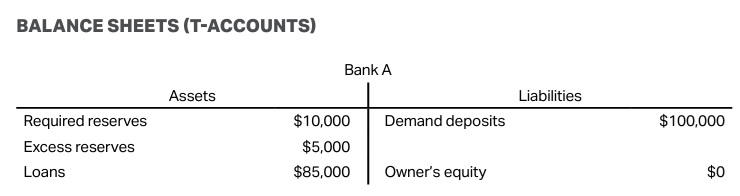
Rip out any lesson about the money market graph, unless
you want to learn a history lesson about this graph.
you want to learn a history lesson about this graph.
Rip out any lesson on the bank's balance sheet, unless you
want to teach a history lesson about it. Rather, students
should understand the balance sheet of the Federal Reserve.
want to teach a history lesson about it. Rather, students
should understand the balance sheet of the Federal Reserve.
Below is a short video from The Dead Poets Society
starring Robin Williams where he instructs his students to
rip out pages from their poetry book which should happen
to many of the pages in economics textbooks that relate to
monetary policy of the past. Also, it is quite ironic that
Robin Williams draws a graph about poetry on the
blackboard, as graphs tell important stories in economics.
starring Robin Williams where he instructs his students to
rip out pages from their poetry book which should happen
to many of the pages in economics textbooks that relate to
monetary policy of the past. Also, it is quite ironic that
Robin Williams draws a graph about poetry on the
blackboard, as graphs tell important stories in economics.
To use the interactive Dual Mandate Bullseye follow the directions underneath the graph.
To further expand upon the Dual Mandate, the information below comes from the Statement on
Longer-Run Goals and Monetary Policy Strategy, adopted effective January 24, 2012; as amended
effective January 29, 2019.
Maximum Employment
The maximum level of employment is largely determined by nonmonetary factors that affect the
structure and dynamics of the labor market. These factors may change over time and may not be
directly measurable. Consequently, it would not be appropriate to specify a fixed goal for
employment; rather, the Committee’s policy decisions must be informed by assessments of the
maximum level of employment, recognizing that such assessments are necessarily uncertain and
subject to revision. The Committee considers a wide range of indicators in making these
assessments. Information about Committee participants’ estimates of the longer-run normal rates
of output growth and unemployment is published four times per year in the FOMC’s Summary of
Economic Projections. For example, in the most recent projections, the median of FOMC
participants’ estimates of the longer run normal rate of unemployment was 4.4 percent.
NOTE: There is a difference between Maximum Employment used by the Federal Reserve and the
Natural Rate of Unemployment (used in the Dual Mandate graph above) which the CBO
(Congressional Budget Office) defines the natural rate of unemployment as “the rate of
unemployment that arises from all sources other than fluctuations in demand associated with
business cycles.” Maximum employment and the natural rate of unemployment are not identical,
but do tend to move in the same direction over time.
Stable Prices
The Committee reaffirms its judgment that inflation at the rate of 2 percent, as measured by the
annual change in the price index for personal consumption expenditures, is most consistent over
the longer run with the Federal Reserve’s statutory mandate.
Moderate Long-Term Interest Rates
Communicating this inflation goal clearly to the public helps keep longer-term inflation
expectations firmly anchored, thereby fostering price stability and moderate long-term
interest rates and enhancing the Committee’s ability to promote maximum employment in the
face of significanteconomic disturbances.
https://www.federalreserve.gov/monetarypolicy/files/FOMC_RulesAuthPamphlet_202001.pdf#page=4
Longer-Run Goals and Monetary Policy Strategy, adopted effective January 24, 2012; as amended
effective January 29, 2019.
Maximum Employment
The maximum level of employment is largely determined by nonmonetary factors that affect the
structure and dynamics of the labor market. These factors may change over time and may not be
directly measurable. Consequently, it would not be appropriate to specify a fixed goal for
employment; rather, the Committee’s policy decisions must be informed by assessments of the
maximum level of employment, recognizing that such assessments are necessarily uncertain and
subject to revision. The Committee considers a wide range of indicators in making these
assessments. Information about Committee participants’ estimates of the longer-run normal rates
of output growth and unemployment is published four times per year in the FOMC’s Summary of
Economic Projections. For example, in the most recent projections, the median of FOMC
participants’ estimates of the longer run normal rate of unemployment was 4.4 percent.
NOTE: There is a difference between Maximum Employment used by the Federal Reserve and the
Natural Rate of Unemployment (used in the Dual Mandate graph above) which the CBO
(Congressional Budget Office) defines the natural rate of unemployment as “the rate of
unemployment that arises from all sources other than fluctuations in demand associated with
business cycles.” Maximum employment and the natural rate of unemployment are not identical,
but do tend to move in the same direction over time.
Stable Prices
The Committee reaffirms its judgment that inflation at the rate of 2 percent, as measured by the
annual change in the price index for personal consumption expenditures, is most consistent over
the longer run with the Federal Reserve’s statutory mandate.
Moderate Long-Term Interest Rates
Communicating this inflation goal clearly to the public helps keep longer-term inflation
expectations firmly anchored, thereby fostering price stability and moderate long-term
interest rates and enhancing the Committee’s ability to promote maximum employment in the
face of significanteconomic disturbances.
https://www.federalreserve.gov/monetarypolicy/files/FOMC_RulesAuthPamphlet_202001.pdf#page=4
The idea behind creating this interactive Dual Mandate Bullseye comes The Federal Reserve Bank of Chicago's creation of
the original Dual Mandate Bullseye: https://www.chicagofed.org/research/dual-mandate/the-bullseye-chart
the original Dual Mandate Bullseye: https://www.chicagofed.org/research/dual-mandate/the-bullseye-chart
Moving forward, you must memorize the terms and abbreviations that will be used throughout this lesson
regarding the Reserves Graph. If you do not memorize these, you will have trouble understanding the Ample-
Reserves Regime.
regarding the Reserves Graph. If you do not memorize these, you will have trouble understanding the Ample-
Reserves Regime.
Three of the terms above relating to interest rates are categorized as administered rates, meaning those rates
that change because of policy decisions by the Federal Reserve. These administered rates are the DR (primary),
IOR, and interest on ON RRP. The FFR is not an administered rate, but rather a targeted rate upon which other
interest rates in the economy are based.
IOR and interest on ON RRP are the two interest rates that will be detailed throughout your learning about the
Ample-Reserves Regime. Remember that IOR today is a PRIMARY TOOL used to influence the targeted FFR.
Below are two short interactive examples on how IOR and interest on ON RRP function. Again, and most
importantly throughout this lesson, pay particular attention to these two administered rates.
that change because of policy decisions by the Federal Reserve. These administered rates are the DR (primary),
IOR, and interest on ON RRP. The FFR is not an administered rate, but rather a targeted rate upon which other
interest rates in the economy are based.
IOR and interest on ON RRP are the two interest rates that will be detailed throughout your learning about the
Ample-Reserves Regime. Remember that IOR today is a PRIMARY TOOL used to influence the targeted FFR.
Below are two short interactive examples on how IOR and interest on ON RRP function. Again, and most
importantly throughout this lesson, pay particular attention to these two administered rates.
Definition of Regime
Before getting into the NEW monetary policy entitled Ample-Reserves Regime, you must realize that the term
"regime" in recent times might have taken on a negative connotation relating to an authoritarian-type of
government or a dictatorship. However, just like many words in the dictionary, this term has several meanings.
The term "regime" in the FED's Ample-Reserves Regime means the policies of the FED are "a system or a
planned way of doing things."
Before getting into the NEW monetary policy entitled Ample-Reserves Regime, you must realize that the term
"regime" in recent times might have taken on a negative connotation relating to an authoritarian-type of
government or a dictatorship. However, just like many words in the dictionary, this term has several meanings.
The term "regime" in the FED's Ample-Reserves Regime means the policies of the FED are "a system or a
planned way of doing things."
Similar to many of the other lessons you have learned in economics, a graph is an important tool used to
describe economic concepts. Because you are going to be looking at this graph throughout the remainder of
this lesson, you will be required to label the graph correctly with the terms and abbreviations you learned in
the lesson above.
Take your cursor or finger and drag the correct terms next to their correct abbreviations.
describe economic concepts. Because you are going to be looking at this graph throughout the remainder of
this lesson, you will be required to label the graph correctly with the terms and abbreviations you learned in
the lesson above.
Take your cursor or finger and drag the correct terms next to their correct abbreviations.
Below you will be pressing the green buttons that give you a time frame with an explanation starting with
The Great Recession in 2008 all the way to 2021.
Consistent with its January 2019 Statement Regarding Monetary Policy Implementation and Balance Sheet
Normalization, the Committee reaffirms its intention to implement monetary policy in a regime in which an
ample supply of reserves ensures that control over the level of the federal funds rate and other short-term
interest rates is exercised primarily through the setting of the Federal Reserve's administered rates, and in
which active management of the supply of reserves is not required.
https://www.federalreserve.gov/monetarypolicy/policy-normalization.htm
The Great Recession in 2008 all the way to 2021.
Consistent with its January 2019 Statement Regarding Monetary Policy Implementation and Balance Sheet
Normalization, the Committee reaffirms its intention to implement monetary policy in a regime in which an
ample supply of reserves ensures that control over the level of the federal funds rate and other short-term
interest rates is exercised primarily through the setting of the Federal Reserve's administered rates, and in
which active management of the supply of reserves is not required.
https://www.federalreserve.gov/monetarypolicy/policy-normalization.htm
Looking at the graph below you are shown a situation where there are "limited or scarce reserves" which
occurred up until quantitative easing (2008 - 2014) moved the supply of reserves to a point in January 2019
when the FED officially announced its "ample-reserves regime" as the norm for monetary policy.
Notice when you drag the S (supply of reserves) along the D (demand for reserves) inside the area of "limited
reserves," this drives the FFR down.
Notice, though, when you drag the S (supply of reserves) along the D (demand for reserves) inside the area of
"ample reserves" where the D is nearly perfectly elastic, the FFR remains relatively the same.
occurred up until quantitative easing (2008 - 2014) moved the supply of reserves to a point in January 2019
when the FED officially announced its "ample-reserves regime" as the norm for monetary policy.
Notice when you drag the S (supply of reserves) along the D (demand for reserves) inside the area of "limited
reserves," this drives the FFR down.
Notice, though, when you drag the S (supply of reserves) along the D (demand for reserves) inside the area of
"ample reserves" where the D is nearly perfectly elastic, the FFR remains relatively the same.
History of How the Ample-Reserves Regime Started (2008 - 2021)
Definition of Reserves
The graph below indicates what has happened to reserves held at the Federal Reserve since 1978, my first year of
teaching economics. Take your cursor or finger along the line on the graph from 1978 - 2008 which represents total
reserves (required reserves + excess reserves starting in 1984). Notice that most of the reserves are required reserves,
as monetary policy operated in what was called a "limited or scarce reserves" framework.
In the year 2008, the U.S. economy entered into The Great Recession. Move your cursor or finger along the line on
the graph to see what happened to the amount of reserves held at the Federal Reserve when it started paying interest on
reserves in October 2008. This was the just the beginning of moving from a "limited or scarce reserves" and later into an
"ample-reserves regime."
The graph below indicates what has happened to reserves held at the Federal Reserve since 1978, my first year of
teaching economics. Take your cursor or finger along the line on the graph from 1978 - 2008 which represents total
reserves (required reserves + excess reserves starting in 1984). Notice that most of the reserves are required reserves,
as monetary policy operated in what was called a "limited or scarce reserves" framework.
In the year 2008, the U.S. economy entered into The Great Recession. Move your cursor or finger along the line on
the graph to see what happened to the amount of reserves held at the Federal Reserve when it started paying interest on
reserves in October 2008. This was the just the beginning of moving from a "limited or scarce reserves" and later into an
"ample-reserves regime."
Definition of Ample
Reserves are considered ample when the Fed's supply is at least large enough so that the equilibrium FFR (where demand equals supply) does not
materially change with movements in the quantity of reserves in the banking system. Importantly, this condition means that the Fed cannot control the
federal funds rate through routine changes in the quantity of reserves, also known as open market operations. When implementing monetary policy in an
ample-reserves regime, the Fed primarily relies on its administered interest rates (IOR and interest on ON RRP) to keep the FFR within the target range.
https://www.federalreserve.gov/econres/notes/feds-notes/implementing-monetary-policy-in-an-ample-reserves-regime-the-basics-note-1-of-3-20200701.htm#:~:text=And%20this%20is%20the%20essence,reserves%20in%20the%20banking%20system
1-of-3-20200701.htm#:~:text=And%20this%20is%20the%20essence,reserves%20in%20the%20banking%20system
Reserves are considered ample when the Fed's supply is at least large enough so that the equilibrium FFR (where demand equals supply) does not
materially change with movements in the quantity of reserves in the banking system. Importantly, this condition means that the Fed cannot control the
federal funds rate through routine changes in the quantity of reserves, also known as open market operations. When implementing monetary policy in an
ample-reserves regime, the Fed primarily relies on its administered interest rates (IOR and interest on ON RRP) to keep the FFR within the target range.
https://www.federalreserve.gov/econres/notes/feds-notes/implementing-monetary-policy-in-an-ample-reserves-regime-the-basics-note-1-of-3-20200701.htm#:~:text=And%20this%20is%20the%20essence,reserves%20in%20the%20banking%20system
1-of-3-20200701.htm#:~:text=And%20this%20is%20the%20essence,reserves%20in%20the%20banking%20system
To see how changing the administered rates (DR (primary), IOR, and interest on ON RRP) in an Ample- Reserves Regime
so as to expand or contract the economy, press the Expansionary or Contractionary buttons to the left of the graph below.
so as to expand or contract the economy, press the Expansionary or Contractionary buttons to the left of the graph below.
The views expressed on this site do not necessarily reflect those of the Federal Reserve Bank Banks or the Federal
Reserve System.
With that being said, a special thanks goes to Jane Ihrig, Senior Adviser at the Board of Governors of the Federal
Reserve System, and Scott Wolla, Economics Education Coordinator at the Federal Reserve Bank of St. Louis, for
their forward guidance in disseminating information about the new monetary policy tools in the FED's Ample-
Reserves Regime. Without their published work, economics educators throughout the United States would
continue to teach students the history of monetary policy rather than how the FED actually implements monetary
policy today.
Let’s close the gap: Revising teaching materials to reflect how the Federal Reserve implements monetary policy.
https://www.federalreserve.gov/econres/feds/files/2020092pap.pdf
Teaching the New Tools of Monetary Policy
https://www.stlouisfed.org/education/teaching-new-tools-of-monetary-policy
Reserve System.
With that being said, a special thanks goes to Jane Ihrig, Senior Adviser at the Board of Governors of the Federal
Reserve System, and Scott Wolla, Economics Education Coordinator at the Federal Reserve Bank of St. Louis, for
their forward guidance in disseminating information about the new monetary policy tools in the FED's Ample-
Reserves Regime. Without their published work, economics educators throughout the United States would
continue to teach students the history of monetary policy rather than how the FED actually implements monetary
policy today.
Let’s close the gap: Revising teaching materials to reflect how the Federal Reserve implements monetary policy.
https://www.federalreserve.gov/econres/feds/files/2020092pap.pdf
Teaching the New Tools of Monetary Policy
https://www.stlouisfed.org/education/teaching-new-tools-of-monetary-policy
In this lesson on the new tools of monetary policy, you will learn the following concepts:
*What are some of the most historical dates in regards to monetary policy?
*What is the Dual Mandate that Congress requires of the Federal Reserve?
*What is the history behind the new tools of monetary policy--Ample-Reserves Regime?
*What does the graph look like regarding Limited Reserves and Ample Reserves?
*How are monetary policy tools in an Ample Reserves Regime implemented to influence
the expansion or contraction of an economy?
*How do these new tools influence maximum employment, stable prices, and moderate
long-run term interest rates?
*What are some of the most historical dates in regards to monetary policy?
*What is the Dual Mandate that Congress requires of the Federal Reserve?
*What is the history behind the new tools of monetary policy--Ample-Reserves Regime?
*What does the graph look like regarding Limited Reserves and Ample Reserves?
*How are monetary policy tools in an Ample Reserves Regime implemented to influence
the expansion or contraction of an economy?
*How do these new tools influence maximum employment, stable prices, and moderate
long-run term interest rates?
In this lesson on monetary policy's Ample Reserves Regime you learned:
*What are some of the most historical dates in regards to monetary policy?
*What is the Dual Mandate that Congress requires of the Federal Reserve?
*What is the history behind the Ample Reserve Regime?
*What does the graph look like regarding Limited Reserves and Ample Reserves?
*How are monetary policy tools in an Ample Reserves Regime implemented to influence
the expansion or contraction of an economy?
*How do these new tools influence maximum employment, stable prices, and moderate
long-run term interest rates?
*What are some of the most historical dates in regards to monetary policy?
*What is the Dual Mandate that Congress requires of the Federal Reserve?
*What is the history behind the Ample Reserve Regime?
*What does the graph look like regarding Limited Reserves and Ample Reserves?
*How are monetary policy tools in an Ample Reserves Regime implemented to influence
the expansion or contraction of an economy?
*How do these new tools influence maximum employment, stable prices, and moderate
long-run term interest rates?
According to Investopedia, "The prime rate (prime) is the interest rate that commercial banks charge their most
creditworthy customers, generally large corporations. The prime interest rate, or prime lending rate, is largely determined
by the federal funds rate (FFR) . . . The prime rate forms the basis of or starting point for most other interest rates—
including rates for mortgages, small business loans, or personal loans."
"Generally, the prime rate is reserved for only the most qualified customers—those who pose the least amount of default
risk. Prime rates may not be available to individual borrowers as often as to larger entities, such as corporations and
particularly stable businesses."
https://www.investopedia.com/terms/p/primerate.asp
Even though the prime rate is given to mostly large entities, it relates to you because your borrowing is based upon your
credit worthiness. The more credit worthy you are, the closer your borrowing rates will be to the prime rate. The less
credit worthy you are, the farther away your borrowing rates will be to the prime rate. Throughout your lifetime, if you
start and continue to be a credit-worthy customer, you can save yourself thousands of dollars in interest payments
(mortgage, home equity loan, car loan, and so on).
Notice below that the prime rate has run about 2.5 - 3.0% above the FFR. Be a credit-worthy customer and you will receive
rates closer to the bench mark prime rate.
By your keeping track of the direction the FED wants to go with the targeted FFR, you can keep track of the direction in
which the prime rate will be heading.
creditworthy customers, generally large corporations. The prime interest rate, or prime lending rate, is largely determined
by the federal funds rate (FFR) . . . The prime rate forms the basis of or starting point for most other interest rates—
including rates for mortgages, small business loans, or personal loans."
"Generally, the prime rate is reserved for only the most qualified customers—those who pose the least amount of default
risk. Prime rates may not be available to individual borrowers as often as to larger entities, such as corporations and
particularly stable businesses."
https://www.investopedia.com/terms/p/primerate.asp
Even though the prime rate is given to mostly large entities, it relates to you because your borrowing is based upon your
credit worthiness. The more credit worthy you are, the closer your borrowing rates will be to the prime rate. The less
credit worthy you are, the farther away your borrowing rates will be to the prime rate. Throughout your lifetime, if you
start and continue to be a credit-worthy customer, you can save yourself thousands of dollars in interest payments
(mortgage, home equity loan, car loan, and so on).
Notice below that the prime rate has run about 2.5 - 3.0% above the FFR. Be a credit-worthy customer and you will receive
rates closer to the bench mark prime rate.
By your keeping track of the direction the FED wants to go with the targeted FFR, you can keep track of the direction in
which the prime rate will be heading.
- - - - - - - - - - - - - - - - - - - - - - - - - - - - - - - - - - - - - - - - - - - - - - - - - - - - - - - - -
Monetary Policy (2019 - ) The Ample-Reserves Regime
- - - - - - - - - - - - - - - - - - - - - - - - - - - - - - - - - - - - - - - - - - - - - - - - - - - - - - - - -
Rip out any lesson on the tools of monetary policy that include
the reserve requirement and the discount rate as the reserve
requirement is no longer a tool of monetary policy and the
discount rate is now the primary credit rate offered through the
discount window.
the reserve requirement and the discount rate as the reserve
requirement is no longer a tool of monetary policy and the
discount rate is now the primary credit rate offered through the
discount window.
March 22, 2019
Atlanta Fed president and CEO Raphael Bostic speaks at the San
Francisco Fed's Macroeconomics and Monetary Policy Conference
about the Federal Open Market Committee's recent decisions the
Committee continues to view the federal funds rate target as the
primary tool to adjust the stance of monetary policy.